Showing posts with label Creative. Show all posts

Sunday, October 13, 2013

Breaking the Silence

A long overdue blog here for readers...

No, I'm not announcing that I'm no longer working on The Shattered War.  In fact it's pretty much the opposite.  I'll be up front here folks, development has been in "slow time" for the past couple of months. I've been spending maybe an hour a day to work on the mod, and some days I haven't worked on it at all.  As such, things have been progressing slowly. 

Some of the things I've been doing have been very time consuming, but haven't really contributed much to the "content complete" nature of being able to run the mod from start to finish. We're talking dialogue tweaking - the animations, the flow, the voice cuts. It's things like making sure the decorations and appearance of levels is "just right" - making sure they have wind, checking that there are lootable items for players to discover adjusting ambient NPCs and behaviours to make areas "look inhabited.  Then there's creating new custom items and giving them their own descriptions and codex entries.

All this is fantastic stuff and I feel it really adds to that undefinable "quality" factor of a mod, but it's not great for maintaining developer motivation in feeling like you're making progress towards having it "finished".

Perfectly phrased codex entries aren't gameplay

As such, I'm going to switch my focus for the time being on getting the game "content complete" and making it completely playable without glitches and bugs from start to finish. There are a lot of components to the mod and a lot of choices that the player can make, so I'm going to make sure that those can be followed through to completion. This will mean using "unfinished" levels in a few instances, but in this case I'm going to ditch my perfectionist nature so that the mod can be completed.

From now on, I'll be looking to post a weekly update on my progress - so stay tuned for more regular information on the development process!

Wednesday, May 9, 2012

Level Design: One Simple Idea

Level design is both extraordinarily complex and mind numbingly simple. In essence, a level must be aesthetically pleasing and functional for gameplay.  Simply put, it must look good and it must let the player play the game. Unfortunately, that is not a straightforward task. To demonstrate some of my thought processes, here's some of the steps I've taken on a level I'm currently working on.

As I've stated previously, I always try to start with some kind of idea or map sketch. For this level, I started with a map. (Forgive my pictures here, as I've quickly sketched these on the computer because I don't have a scanner) My first idea looked a little like this:

Draft map

This is a simple design, a dual level area, with a stream off to the side. A few extra buildings would added here and there. The main problem is that this just didn't inspire me. Functionally it works, and there is the potential for it to look good, but it lacked "one simple idea". What I mean is the idea of a single view within the level that inspires you, and hopefully the player. You may end up with more than one of these per level, but you should make sure you have at least one of these in your mind before start building the level in an editor.

I attempted to try and rework this idea a few times, but I couldn't manage to get something that really appealed to me. The thing to do in this circumstance is to throw it away. If you have to work really hard to make something feel right, you're better off trying a completely new tack. You may end up returning to this idea at a later date and turning it into something you do like, but you need to be willing to throw away ideas that don't work. So I drew this instead:

Take 2

I came up with this idea after wandering around in some bushland and combining different fragments of the landscape that I'd seen. The four trees in the middle on the edge of the cliff were my "one simple idea", and the view of a tower on the hill in the corner was another. Aesthetically I had more ideas that appealed to me and that I wanted to create. The only real problem I felt was that there could be a bit of backtracking, so I decided to add in a set of steps on the right hand side, which both would prevent that from occurring and also potentially add in another nice visual cue.

I'm part way through developing the level now, so I won't really show much of it, but here's the view that started as the core idea for this level. It doesn't look that great because it's using default lighting and isn't decorated much, but the kernel of the visual appearance I had in mind is there.

One simple idea

The final thing to remember is that fluidity in the design as it translates into an actual level is necessary. My final level will not end up looking exactly like the map as it was originally drawn, but the key visual and functional elements will still stay there. I've already made adjustments in terms of locations and tweaked the structure of the level, but the core layout for movement and the "visual cues" that I want to have present will all be there in the release version of the level.

Thursday, May 3, 2012

Video Games, Art and Pretentiousness

Some of you may have seen an article published by one Taylor Clark in The Atlantic about games and their validity as art. This article raised a bit of a stir in some circles, and I think it's an article worth discussing. Note that I'm going to have spoilers for both Braid and Red Dead Redemption in this article.  Those games are both fairly old, so I figure I should mostly be safe, but there's the warning just in case. If you haven't played either of them, go do so then come back and read this article. They're both very good games with really interesting endings.

The first thing to note from the article is the rather ugly and shameful bias that it displays. The unabashed and continuous praising of both Braid and Jonathon Blow is one of the worst examples of journalism I've seen in some time. Journalists should be presenting a balanced view of their subject matter, because to do otherwise effectively turns their work into a big long opinion piece. That's not journalism. That's a blog post or at best and editorial column.

Part of the problem is that Braid is held up as a shining example of what games should be, and all other games are denigrated as meaningless and puerile entertainment fit only for idiots and juveniles. To dismiss something as having no real merit in an entertainment form simply because it does not meet one particular standard - in this case "being artistic" - belies the inherent benefit of diversity within a medium. If all games must be artistic in order to have worth, then the same logic must also be applied to movies, books, music, theatre and any other medium that can be used to communicate an idea to an audience. This issue is exacerbated by the shameless cherry picking of arguably the most artistically shallow counter-examples in order to attempt to prove this point. By picking games focused entirely on action and killing/shooting/fighting, Clark demonstrates an even worse bias than his continual praise of Braid. By failing to acknowledge even a single other game with depth in terms of storytelling, drama, theme or literary ideas, the argument comes across as completely and utterly uninformed.

Dear Esther, anyone?

For those who don't know (seriously, you should play it, but this is your last chance) Braid is a 2D platformer about the story of Tim. The game appears to be about Tim attempting to save the princess, as he travels through a series of levels fronted by narrative describing his attempts to find and reconcile his search for her. The game features some interesting time rewinding mechanics, which lead the player to solving puzzles in some fairly unique ways for a platformer. It has some well designed and thought out mechanics.

I enjoyed Braid quite a lot, but as I was playing, something always felt a little off. There was some element of me that felt that the story wasn't quite right. The disjointed narrative wasn't confusing, but intriguing, both from a experiential and writing perspective. I found the writing to be missing an element of personalised emotion, as though the writer were taking ideas that they conceptually understood at a factual level, but did not emotionally comprehend the ramifications of the content. To me, it was as though it had been written by someone with autism or asperger's syndrome. This didn't make the game any less interesting, but meant as a player I was trying to insert real emotion into Tim's story because it only contained only the idea of emotion rather than emotion itself.

The real disconnect came for me when I reached the game's epilogue, where it is revealed that "The Princess" referenced throughout the game is actually the atomic bomb, and that the game is seemingly about Tim's attempt to reconcile and repent for his role in The Manhattan Project. The disconnect wasn't the reveal itself, because it was always obvious that there was something more to the story, but the issue was instead with the manner in which the reveal was done. The revelation was delivered in an overly heavy-handed manner that shoved it down the player's throat. Up until this point, the game had been filled with allegory and intentionally vague writing, which was undone by explicitly naming the princess and issuing quotes from people involved in The Manhattan Project. By making the twist and overall story so patently obvious, Braid undid much of intrigue and interest that it had sparked up until that point.

This isn't mature story telling

The ending to Braid was a disappointment because it could have been so much more. Maturity in atorytelling is not achieved through heavy handed delivery that verges on breaking the fourth-wall. The abrupt directness of Braid's reveal is a hallmark of immature storytelling, almost explicitly explaining the whole purpose of the game. Instead of providing evidence for the player to deduce the ending on their own, Braid comes out and directly states the truth of the game's mystery. Great themes and ideas should be present via the entire delivery of the work, rather than directly stated through a twist right at the end.

For me, one disappointment was that an alternate scene does exist that would have gone some way to providing a meaningful ending without this heavy handed approach. If the player obtains a series of stars in the game (all of which are very obscure and difficult to obtain), it is possible for them to (again, through an obscure process) actually touch the princess as part of the game. This does not occur as part of normal gameplay. Upon doing so, the screen flashes white and an explosion noise sounds. When the white fades away, the Princess is gone. In the context of having already seen the heavy handed ending, this series of events makes complete sense, but devoid of it, it is a strange occurrence that is obviously symbolic, though it would be up to the player to determine its significance. At this point, the game could have simply forced the player to rewind in order to proceed, just as it does in the "normal" ending, and none of the symbolism of that ending would have been lost.

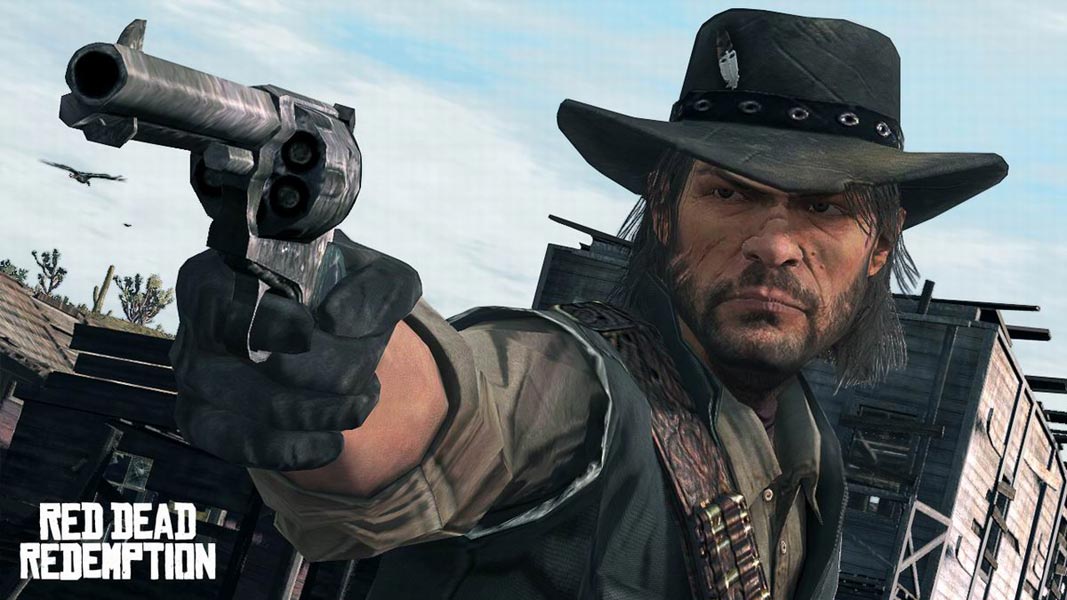
Conversely, Blow has directed much criticism at Red Dead Redemption, for being about a father figure attempting to obtain redemption, but in attempting to do so, the player must murder hundreds of people during the course of the game. Blow's argument is that the murder undermines the portrayal of the lead character of John Marsden. The unfortunate thing here is that Blow has missed the entire point of the storytelling and the game's climax. It's true that Marsden kills repeatedly during the adventure despite being cast as a "good" character, but the tale ultimately describes how he is unable to escape the burden of his past as a criminal. That Blow fails to understand this is slightly ironic, given that this idea has strong parallels with his own story within Braid. Moreover, it fails to see the larger picture that is delivered in the game's climax.

John Marston isn't meant to be "good"

After many hours of tribulations working for the Government in order to bring his former criminal friends to justice, Marston is finally set free and allowed to return to his home. This is not without a great deal of argument with his employers, who have repeatedly demonstrated their unwillingness to let Marston go, and forced him to do more than they initially asked. Marston returns to normal life with his family and the player herds cattle, delivers supplies, teaches his son how to hunt and otherwise lives a normal life. This is undone in the final mission of the game, where Government troops come for Marston. Sending his wife and son off to safety, Marston barges out of the barn and attempts to take down the Government troops, but after the player empties their weapon, the game removes control and shows Marston dying in a hail of bullets. The game jumps your control to that of his wife and son riding away on a horse, who hear the gunfire. You yhen ride back to the farm to find John Marston dead.

Red Dead Redemption in this sequence tells the player through its actions, gameplay and visuals that there are some debts that may never be paid off without paying the ultimate sacrifice. Marston has spent the entire game trying to escape his old life by effectively reliving it, which is ultimately a futile endeavour. Despite a game spent searching for redemption through murder, Marston only eventually finds redemption for his misdeeds by sacrificing himself to save the lives of his family. The game did not feel the need to have a voice over to explicitly tell the player this or otherwise deliver this message in a heavy handed manner, because it was more mature than that. What the writers at Rockstar recognised that Blow did not is that by allowing the player to interpret the meaning of their work rather than being explicitly told the meaning, their storytelling was inherently more meaningful and mature.

Playing your cards close to your chest usually works better

All analysis aside, perhaps the most stupid thing is the necessity that some people seem to have to insist that games must be "artistic". For starters, no one can define what is meant by "artistic". What some people consider to be "art" is not by others, and the same goes for things considered to be "artistic". What is worse is that this train of thought stems from a viewpoint that games are somehow an inferior storytelling medium or entertainment form. It is as though unless video games can be considered art by some arbitrary measure, that they are somehow a childish pursuit or lesser creations. There seems to be an insistence on claiming that video games are dumb, even when this is often because people make them so by analysing them at only the most perfunctory level.

Attempts to be deliberately artistic, which is largely Braid's modus operandi, are not necessary to prove the maturity of games.  If anything, this approach smacks of a pretentious attempt to be sophisticated rather than simply being sophisticated. Simply put, Braid is one of a number of games that are trying too hard. Nevertheless, Braid still (mostly) succeeds at being intelligent and thought provoking, but that is in spite of its blatant attempts to be "artistic" rather than because of it.

Games do not need to deliberately attempt to be artistic. Games can be artistic by their very nature. Every time a player stops to admire a beautiful virtual landscape, a game is artistic. Every time someone stops to consider their actions and consequences before acting, a game is artistic. Every time a discussion is held about the "real meaning" of events, scenes or dialogue in a game, that game is artistic. Every time a game inspires emotion in a player or even those people watching it, a game is artistic. To deny otherwise would be to deny the integrity of any other artistic medium. If someone wants to denigrate games as a medium lacking merit, then they simply don't understand them. For gamers or game designers to carry around a chip on their shoulder and take every opportunity to insist and showcase "how artistic they are" is a path that will lead to pretentiously vapid games, more obsessed with being art than actually being art, or a game, or an interesting storytelling medium.
Sunday, August 14, 2011

Developing a protagonist (Part 2)

In my last post I discussed the tendency of games to provide players with choices that were either good or evil or fell into "categorised" choices of personality.  One potential issue with such "choices" is that the player is not ever having to think about their protagonist's true character or how they would react in particular circumstances. These people are effectively metagaming, with only one option that they can pick during dialogue when making a decision, and that is based on a choice about the mechanics presenting the available personas to them. Such characters don't have the depth of a protagonist in film (or even in some games where the player gets no choice in terms of dialogue) because they operate on a predefined set of rules that can be very cleared outlined from very early on in the game.  If we're taking a good/evil dichotomy (as is common in many games), the delineation is simple:

Good: Selfless, will give up rewards, protects innocent people, hunts bad guys, etc, etc.
Evil: Selfish, will threaten/bully/kill to gain rewards, doesn't care about innocent deaths, kills anyone who gets in their way, etc, etc.

These two opposite ends of the spectrum don't offer a whole lot of depth in terms of personality. One's a rampant goody-two-shoes, the other an egotistical psychopath, and never shall the two meet.  Of course, this isn't to say that players can't decide to create a character with more depth that might provide a mixture of both personalities, but they need to be provided with reasonable choices in which to do so. Blanket black and white choices don't and can't provide this depth of character, even for the player who is trying to create it. We're frequently given choices equivalent to rescuing a stranded cat in a tree (and potentially breaking a limb in the process), or setting the tree on fire to incinerate both it and the cat. These aren't challenging choices that make for interesting or complex protagonists.

Rescue the innocent girl or "harvest her for power" isn't exactly a complex choice

Why should writers care about this? After all, flat characters can be a part of entertaining movies, and some of the best selling video games have featured some fairly uninspired and one-dimensional characters.  However, this comes down to whether the writer wants to convince the player to take on a predefined stereotype persona, or help them create a complex and meaningful character as they go through the game. If players are presented with choices that don't neatly fit into Good/Evil or Paragon/Renegade (and don't have gameplay mechanic implications associated with them) then they are more likely to analyse the choice they are about to make and try and develop a rationale behind their decision. The aim is to stop players from going "I'm being good" or "I'm being evil" but actually have them engage with the game to the extent that they are creating a multi-dimensional protagonist of their own imagining.

If we're dealing with a roleplaying game, should the writers not attempt to get the player to create a character equally as complex as a protagonist from other storytelling mediums? Should the designers not only facilitate but actively encourage players to create a fully fleshed out and realistic protagonist with a believable personality? The player may start the game with a shell of a protagonist, maybe even one of the three basic stereotypes listed above.  But by the end of a story with well-crafted decisions, they will have developed a character with a set of morals and values every bit as complex as the most fully realised characters within the game.

Faith really didn't gain any personality in Mirror's Edge

It should also be considered that some people play their protagonist as a virtual avatar - they "are" the protagonist within the game world, and make all decisions as though they are the main player in the story. Arguably, these players offer potentially the greatest reward for a writer: the ability to teach the player something about themselves. 

If a player is forced into a true dilemma where they are forced to pick between two very hard choices, then they will potentially learn something about themselves. Would they risk lives by letting a criminal go free and tracking him to potentially catch a bigger fish in the pond, or would they bring them in straight away? Would they allow a mother to sacrifice her life to save her son's, or would they risk both of their lives in an attempt to save them both?

Save a friend/ally/lover or the lives of strangers... now we're getting warmer.

The protagonist should be the most important and complex character within the story.  This axiom is commonly used when determining the overall worth or emotion or long-lasting impact of a film.  Given this is such an important aspect of storytelling in film, theatre and prose, why is it such a frequently neglected aspect of storytelling within computer games? Gordon Freeman is a blank, emotionless, silent slate: it is up to the player to "be" Gordon and provide him with their thoughts. War from Darksiders has little personality, and along with Marcus Fenix from Gears of War, is practically a static character despite the events within their respective games. Even Alan Wake, a story about a writer, has a personality that's almost as flat and lifeless as they come.

In part, this flat nature may be because these characters never really progress beyond the basic traits that are shown to the player in the earliest stages of the game. They're never forced to develop or show what they are made of besides the straightforward collection of stereotype traits because they're never placed in a situation where they have to make a tough choice. If the protagonist can be placed into a true dilemma, where there is no clear "right" or "wrong", then just as with other story telling mediums, they must display their true character and their values through this choice. These choices are where protagonists from other mediums really shine and mature as characters in front of the audience's eyes.

Games that feature defined characters where the player does not make key game decisions can and should evolve through the story. The protagonist is a willful character that the player is taking through the events of the game, so they should be placed into situations that will demonstrate their true personality and values to the player. This will let the player see more than just surface characterisation, and show a deep and complex protagonist. In Assassin's Creed, Altair goes from being self-centred and arrogant to a more humble and understanding hero. In Thief 2, Garrett leans to trust a former adversary and even laments her death.  These characters retain the core personality introduced very early on in the game, but grow and mature throughout their storytelling.

Garrett didn't let Viktoria die for nothing


If the player is defining the personality of the game's protagonist, force them to make situations that are truly dilemmas. Force them to pick between the lesser of two evils, or alternatively the greater of two goods. They might moan afterwards that they "had to play through the game twice" or "it didn't make that much difference" or "why couldn't I do both??!?", but ultimately this kind of choice makes the protagonist of the game more complex. This forces the player to examine what their character (or they themselves, if they are playing a "virtual protagonist") would do when placed into this situation. 
This is practically the ideal situation for a roleplaying game, as the player is truly forced to adopt a role.

However, there are two very important caveats when dealing with these types of choices. Make sure that these "true dilemmas" are not hamstrung by heavy-handed "alignment" systems that assign a "value" to each decision. If you have a good/evil scale (regardless of what your chosen axis/axes might be) do not modify it because of a player's choice in a "true dilemma". Doing so immediately assigns a value judgement to each option within the dilemma, which means that it is no longer a dilemma and hence the immense value of the choice is lost.

Why did Mass Effect 2 have to dish out paragon/renegade points?

The second caveat applies to all video game choices, but it is even more important when it comes to dilemmas: Don't have a protagonist say "why" they acting the way they are. For one, it sounds unnatural. Only the most poorly written characters verbosely explain the rationale for their actions, because people don't act that way in real life. Secondly, the player is the one making the decision, complete with their own rationale. There is no possible means for the designers to think of every possible rationale that players might have for making a decision, and attempting to do so will only annoy the players that have come up with something you haven't thought of. And that will probably happen in more cases than you would care to imagine.

Designer should be able to get players emotionally and mentally involved with protagonists by giving them true dilemmas to deal with. Let them evolve, grow and show real character and personality throughout the game, and you'll have a more interesting hero for your players to empathise with as they take that journey.

Wednesday, August 10, 2011

Developing a protagonist (Part 1)

Writing in video games is a unique challenge. While elements of writing, structure and story are common across writing, theatre and film, each have their own idiosyncrasies and challenges that demand different styles and approaches. The same is entirely true of video games, for while writing in this medium certainly shares many basic elements with these other forms, the video game writer has to deal with problems not faced by other writers. One of these key issues is that the player is the protagonist of the story - the player is taking the actions that will drive it to its conclusion as opposed to the being a passive viewer watching a defined character progress through it.

In many cases, this allows the player to project some degree of their own personality (or another desired personality) onto the protagonist character, whether it be through gameplay (e.g. a fastidious hero who meticulously searches every area for whatever supplies he or she can), or directly through persona-defining actions (e.g. picking a course or action or dialogue style). This can happen to an extent in other media, whereby people have slightly different interpretations of a character within the bounds of the scenes and events presented to the reader/viewer, but rarely is there the level of freedom granted in games, particularly when dealing with RPGs that allow great variance in defining the protagonist's persona. Since it's easier to work with the extreme case to illustrate a point, I'll focus this discussion on roleplaying games.  Admittedly it's my favoured genre of video game because of the strong story-telling elements and the player's ability to define their protagonist, but the ideas that follow can to some extent be applied to all video games.

We don't want games to have protagonists with as little depth as in this movie

However, it is important to take established principles of story-telling from these forms and examine their usage within video game writing. One such principle or idea I was presented with recent struck a great chord with me and its application to video game writing. The idea was simple: The choice between good and evil is no choice at all.

As this idea was presented in terms of theatre or film, the issue is presenting a character with a "dilemma" in which the established character can only logically make one of the choices without completely undermining their established persona. It's where a character is presented with a choice that effectively provides no choice, because they cannot make any other decision apart from the one that the audience expects.  The argument that follows is that the only interesting decisions are where the character must wrestle with their own morals or values in order to make that decision. The interest frequently comes from characters that make a decision that is difficult and shows the character undergoing a great change.

District 9 climaxes with the growth of a character's persona

This isn't to argue that these foregone conclusions can be uninteresting in and of themselves. James Bond never has to make a decision as to whether or not he will save the world, but the Bond films never lack in drama and excitement. Pirates of the Caribbean sees Jack Sparrow wrangle his way to getting his hands on The Black Pearl and double-crossing Barbossa after striking a deal with him. There is very little drama or interest in their actual decisions, but there is a great deal of excitement and interest generated by the events that result because of those actions.

Of course, the question to ask now is: "How can this principle be applied to games?"  How many times have you played an RPG that provides dialogue options like:
  • Sure, I'll help you.
  • Only if I get paid.
  • You must die!
The problem with this is that it typically doesn't actually present the player with a difficult choice. There's no wrangling from the player in trying to work out what they will do. We have responses based on three character archetypes: the hero, the mercenary, and the evil-doer. Many players will decide upon a particular type of character that they want to play and will merely pick the relevant choice based upon their chosen persona.  This means that the player generally doesn't really care about the dialogue, because their choices are largely predetermined based on the chosen archetype they've picked. They might care about the character and story and be involved with how the plot develops, but ultimately they've gone down one path that was chosen from the very beginning.

Which archetype: James Bond, Jack Bauer or Jason Bourne?

First off, I should say that this isn't necessarily a bad thing. I know many people who have played the Mass Effect series in this way - always picking the paragon option or always choosing to act like a renegade. They've still had a lot of fun playing the game, potentially even going through with both options in two separate playthroughs, and have come to really like their character, even though they're a very simple character in terms of the depth of their personality.

The trend towards voiced protagonists can accentuate this tendency, as the player builds an "image" of a particular personality because of their protagonist's spoken dialogue reinforcing one of the chosen archetypes that the character can portray. Unvoiced protagonists may offer the player more nuance and variance in how the player imagines the exact delivery of the line, which may increase the likelihood of them not neatly fitting into a predetermined archetype. Of course, this is speaking in generalities, and players can still make complex characters even with voiced characters.

From personal experience in Mass Effect, I constructed a mostly paragon character, but one who wasn't afraid to stray into renegade territory where conflict was inevitable. However, mechanics like the paragon/renegade scale mean that players will almost certainly focus predominantly on one such path because of the vast gameplay advantages obtained from doing so. As much as this type of mechanic is pushed as a means to enhance roleplaying it frequently ends up detracting from it instead because the player can end up more concerned with being able to receive the rewards that only come from pursuing one path exclusively rather than walking some kind of middle ground.

I'll discuss the ramifications of these types of choices and how we can work towards more developed protagonists in my next post...

Wednesday, January 5, 2011

Maintaining consistent voice

Once thing I have noticed with some mods is the writing for characters tends to suffer somewhat. Now, some mods have issues with spelling and grammar, but even beyond that a frequent problem is having inconsistent speech style for a character, or worse still, a single style consistent across all characters. This is obviously something that all writers must consider, whether it be for novels, play, film, any form of writing that involves characters and dialogue. That includes video games.

To demonstrate my point, let's take some extreme examples from Dragon Age.  On one hand, let us consider Alistair, a wise-cracking and somewhat insecure warrior, who perhaps struggles with the hand that life has dealt him. This is reflected in his speech, his choice of words, his ability to make a joke even in dark circumstances, and so on. It comes through in his dialogue.  Contrast his character with that of Sten. Sten's dialogue consists of very words, and he typically interprets everything you say literally. He is direct, has little time for humour or wit, and is driven and focused. They both have very distinct and different styles of speaking, with their words, tone of voice, pace of speech, and every aspect of their dialogue.

Player: What were you doing in that cage?  Sten: Standing.

If you had to write dialogue between these two characters, it probably wouldn't be difficult.  But what about if you're writing dialogue for other, less well defined NPCs? Perhaps minor quests givers whose motives you haven't fully defined? (In that case, you need to give them a purpose first!) Even so, it can be difficult to have a fully fleshed out character with a detailed personality, and in the case of minor NPCs, this sometimes isn't necessary.  However, what you must make sure of is that characters have a distinct voice.

Ensure that every character does not sound exactly the same. Each person will have their own favoured words, or manner of speaking. They could be quick to anger, suspicious, treat the player with disdain, be in awe of the player... there are countless options.  The main point is to ensure that you have a clear picture of their style of speech, keeping in mind the words they would use given their upbringing, social status, and their standing in relation to the player.

Don't make lots of NPCs feel like carbon copies

One suggestion I would make to modders to help them maintain a consistent voice for a character is to try and "get inside their head" as it were, and make sure you have a clear picture of the type of thought process and speech patterns.  It may help to try and write NPC dialogue in large chunks for individual NPCs rather than trying to write for many characters in a short period of time.

For exmaple, if you are writing a quest that involves talking to multiple NPCs, it may help to write all of a character's dialogue for that quest without switching to another character. By this, I mean that once you have defined your quest completely, write all the dialogue for each NPC in turn.  If you have defined the various states and interactions that the player can have with each NPC (and if you haven't done this, you should!) you can write all of the NPC's dialogue without switching characters.

While experienced writers can switch between characters without difficulty, modders often run the risk of having all their NPCs sound almost identical if they switch back and forth between them while writing a quest. If you have done your planning, put it to good use by letting it help you write strong and believable individuals within your work.

Wednesday, December 1, 2010

What's your purpose?

Today's post is going to deal with writing for games, and making sure that people pay attention to an essential element: purpose. This works on multiple levels, for you are concerned with your purpose for this dialogue as a writer, and the speaker's purpose in terms of their long term and immediate goals. We will examine these in turn, focusing primarily on dialogue, as that is the means by which a significant amount of a game's story is delivered.

A Writer's Purpose
Whenever you're starting to write a particular piece of dialogue, ask yourself "why?"  Why does this particular piece of dialogue need to be written? Is it to progress the story, provide the player with essential background, develop a character, or something else? What you are really asking is "what does this piece of writing add to the game?" If you can't answer that question, then you've either got a problem, or you don't need to do the writing.

Keep in mind that there are many more reasons you could have dialogue that the few I've listed above. What about "adding some humour into a dark scene", "reinforcing the danger of an adversary", "telling the player their next objective", "warning the player about the faction they're about meet"? All of these are valid reasons for dialogue, and there are many more besides.

Morrigan vs Alistair... The witch wins again.

The other reason for working out the purpose of the dialogue is to help you as a writer define what should and shouldn't be included.  If you're trying to impress upon the player how dangerous their current situation is, you shouldn't include a witty one-liner, because that's not the tone or atmosphere that you're trying to instill. Likewise, telling the player about their next objective generally should include some very clear and direct speech or facts that say exactly what must be done, because you're trying to provide the player with some direction about what to do next. Make sure you provide that direction rather than getting mired in vague directions and allusions.

A Character's Purpose

While you as a writer must have a purpose for a piece of dialogue, you must remember that dialogue is delivered by characters, and characters have their own agendas within the reality of the game world. If they don't, then you'll likely need to give them one.  This means you need both a broad "general" aim of the character, and their specific aim within this dialogue.

In a general sense, a character has some over-arching desire that drives them.  They might seek fame, power, revenge, "a hero's death", or "a peaceful home with a loving family". There should be some ultimate goal or general sense of purpose guiding the character and their actions, as for any character of significance, this is what will drive their actions. Loghain from Dragon Age was driven by patriotism, the Transcendent One from Planescape: Torment was driven by a desire for peace. These driving forces caused a great many other actions, but these were key elements of these characters.

We live in a world that has walls, and those walls have to be guarded...

However, in every interaction, you should also consider what the character is attempting to do right now. They may have their overall driving force, but in each specific dialogue, what are they trying to achieve? Are they trying to romance the PC or get to know them better? Are they imparting information to the player? Are they desperately begging for help? Are they trying to manipulate or deceive the PC? Note that this will reflect the aim of the dialogue as a whole, but the character's intentions will put an individual spin on the information being delivered.

Let's look at a specific example, where the player is just about to head into a big battle. There are two NPCs that the player can choose to talk to before taking to the battlefield. In both cases, the aim of the dialogue from the writer's point of view is to impress upon the player the danger of the forthcoming battle. This is to raise the stakes of the game and make the player feel invested in achieving victory and maybe even a little anxious or apprehensive about the forthcoming battle.

A few extra soldiers would be very useful right now...

However, the aims of the two NPCs are very different: One of them is trying to assist the player and tell them of the (difficult) strategy required to win the battle, but the other might be a traitor and attempting to instill the player with fear. Think about the differences in the speech of the two characters as they communicate with the player - they could potentially end up delivering almost the same information about the upcoming battle, but the tone of their delivery will be markedly different.

Of course, these things can be applied to writing in general, not just writing for video games.  However, in video games, there is more than one way to give information to the player. When considering your purpose, also keep in mind that might be a batter way to deliver your message to the player than through dialogue.  A journal entry, on-screen tip, visual cues or even gameplay itself might help to better fulfill the purpose you've identified. For example, how do you convey an atmosphere of tension through dialogue? What about player controls, or hints as to the solution of a puzzle?

A video game writer can and should use more than just dialogue

By using purpose to define the means and style of writing by which you communicate with your player, a video game writer can produce more engaging material. When all the text helps support the current atmosphere of the game, each dialogue helps to reinforce the personality of the characters speaking, when all the writing is helping to draw the player into the game and the gameworld that has been created, then you have been successful in the task of being a video game writer.

Sunday, November 14, 2010

Why the stigma?

Let's pose a hypothetical situation that you are meeting a person for the first time and they ask you about what you do in your spare time. If you state you are a hobbyist director, writer/poet/screenwriter, visual effects artist, or something similar, there is typically a moderate amount of respect commanded by such an admission.  However, stating that you are an amateur video game creator would likely result in a less than favorable perception by a large percentage of the population. Why?  What is it about video games that immediately elicits the reaction that it is a childish or wasteful past-time?  How is it that games have such a stigma associated with them?

This is perhaps even more strange that if you're a modder working with a modern game title, you actually cover all the names roles above. A modder directs cinematics, creates the levels and environments for the characters, and writes the plot, setting, and dialogue that make up the story that they wish to tell. So what is it about games that means they are viewed with a sense of derision when compared to movies, television, books or other artistic/storytelling mediums? Even when you're dealing with a poorly received movie compared to an extremely popular game from within the same franchise, in the general population, the game will receive more ridicule. And that's even the case when we're talking about a movie franchise known for its obsessive fans like Star Wars.

One of these has a horrible story. The other is a video game.

Computer games are an entirely new storytelling medium.  Scriptwriters and novelists have been asked to contribute to it, and have proven that they don't fully grasp the consequences of an interactive medium. This isn't to say they've done a bad job, but they don't have the necessary skills to excel at it because they don't appear to understand the subtleties required.  Creators of cinematics in video games are taking their cues from film directing, mapping the techniques directly from cinema into video game cutscenes to assist their storytelling capabilities. Games like Half-life pushed the interactive boundaries, having few real cutscenes that remove player input entirely, but instead using design tricks to coax the player into following the action that is presented on screen.

For example, take the opening sequence of Half-life 2.  At one point, the player is herded down a corridor with an interrogation room on their left.  The player has complete control over their actions, but the combination of lighting and sound mean that the vast majority of player stop and look through the small window slot in the door. There is nothing forcing the player to do this, yet because of the game design, they do. How can the skill required to create this sort of scenario not be considered worthy by the public at large? How can the skill of creating a situation that almost guarantees a certain response despite giving the player complete control over their actions be ignored?

Who didn't look inside the first door on the left?

So creating games takes a lot of skill, and draws on and even extends from media that are considered "acceptable" and the people that create them are considered talented.  Yet still many people are reluctant to admit that they play video games, and I don't even want to speculate on what the general opinion is of people who create video games. If someone suggests a party to play video games, responses will typically not be positive.  However, if at a party someone suggests playing games like Guitar Hero or something on the Wii, then generally people are more than happy to get involved.  There appears to be a definite stigma associated with the concept of playing video games as a past-time rather than something that simply happens. Yet very little is said of those people who visit the movies three times a week, or spend a dozen hours or so watching reality tv shows.

Isn't it time that the people who play and create games stood up and stated that they are creating a medium of entertainment every bit as worthy as books, art, music, television and film? Does the creation of video games not require people who have talents that could be applied to one more of these other mediums? Surely the people who enjoy video games can sensibly state that they enjoy an artform that has merit? We need not sit on an evangelical high horse and attempt to convert the populace en masse to the church of video gaming, but at the very least, we can declare that this thing that we enjoy takes great skill to create, and that it does not deserve to be treated with contempt.

Saturday, October 30, 2010

What's in a face?

The human brain is fantastic at recognising similarities when it comes to things like human faces.  Which means when we're dealing with computer games that show people and faces in any sort of detail, designers have to be somewhat particular about the creation of individual characters. Faces can assist in portraying age, personality and even give information about a character's life, so should be created with some thought.

When people are walking down a crowded street, it's easy to pick out the faces of people they know, and this translates to the interactions a player has with characters in a game. Individuality must be a major factor when creating faces and characters because people are so good at recognising faces, so multiple characters that all have the same generic face will immediately break the illusion of reality for the player.  That said, if a player never sees these "generic faces" up close, then the problem is not that significant.

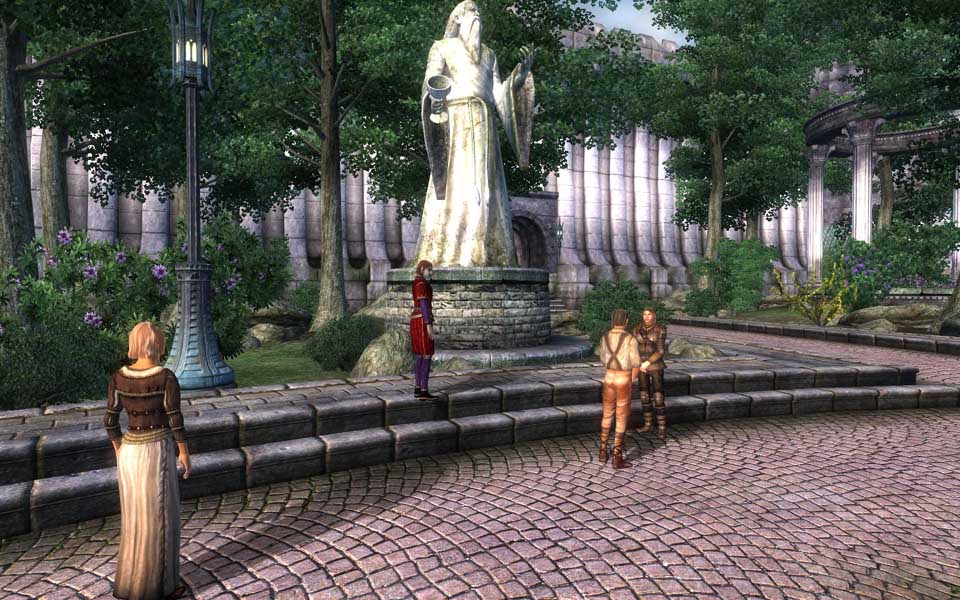
Oblivion suffered partially from "generic face syndrome"

In Dragon Age, like many non-first person games, you don't get a particularly close look at the faces of many individuals unless you talk to them and subsequently get a close-up camera during conversation.  In first-person games there's frequently the chance to get a close look at people's faces, which will translate into requiring a few extra faces needed for the "extras" within the game. However, the most effort should be invested in a game's major characters to make them memorable and distinctive. So how should designers work on creating NPCs and facial appearances that will help to create individual and unique characters?

In computer games, designers have many tools at their disposal to communicate to the player, and portraying the personality of characters is something that can be done in numerous ways.  There's overall appearance and body shape, facial apperance, their speech (both in terms of vocabulary and VO delivery), and things like their ambient behaviour when they're not interacting with the player. A designer should be abke to use all these tools to help convey and reinforce the personality of characters, particularly when it comes to major NPCs like crucial plot characters or allies. Some characters might pace incessantly, sit and meditate, read a book, and so on. This helps convey their character before the player even talks to them.

You know this character's profession from a single glance

When it comes to appearance it is ideal if a character's face can help reinforce their personality, even if in a stereotypical manner. People will associate certain facial types and structures with particular personalities, so the gaunt faced character will serve better as an older or more world-weary person, whereas the character with a larger or rounder face is more likely to be jovial or amicable. This isn't to say that characters should conform entirely to stereotypes, but designers should utilise these to help convey key aspects of character personality when create overall appearances and faces.

So if we're dealing specifically Dragon Age head morphs, there are a lot of things to consider. Skin, eye and hair colour, hair style, skin complexion, then various tattoos and makeup considerations are the basic superficial features that can help convey a character's background. As an example, a particularly flamboyant of flirty female might have strong makeup, perhaps bright red lipstick to attract attention. A character who spends all their time outside might have skin type with more wrinkles but less not an aged facial texture. Consider the shape of the character's brow and whether the corners of their lips are naturally raised or lowered as these could suggest a basic friendly or unfriendly disposition for the character.

This character's face suggests friendliness

Facial structure itself is a little more difficult to define in terms of how it relates to someone's personality, but there are some general sort of rules you might be able to follow. A squarer and more prominent jaw will help suggest a bulkier and stronger character, whereas a more narrow and pointy jaw will tend to make players think the characters is perhaps more dainty or lithe. Consider other facial features: high cheekbones may indicate a more confident or authoritative figure, thin nosed characters might tend to be fussy or annoying, small button noses might be used for more happy or shy people... I'm sure there are many other stereotypes that you can think of to help support character traits.

Ideally a face should just be another means that help support and convey character personality and history. Thus for important characters that have a personal involvement with the player, a designer should try to make those faces as individual as their dialogue and personality.

Tuesday, October 19, 2010

Let's add a little character

What do you think of when you hear a game's name? What images comes to your mind when I say Mass Effect, Halo and Mirror's Edge? I'm going guess something like this...

The poster children

Recognisable characters help with the marketing of a game. Everyone can identify Mario, Lara Croft, Gordon Freeman, Sonic the Hedgehog or Pacman. Lead or likable characters that stick in the minds of players help raise interest, spark curiousity, and make people love the game. Take Duke Nukem Forever: if it were not for the love held by fans for the lead character from games over 10 years old, the idea of finishing the development of the game would have been ditched long ago. This is the kind of loyalty and dedication (though it could be aruged it's now delved into the realm of pure stubbornness) that game developers would love to be able to incite in fans for every character they create.

We've all experienced our share of games with bland main characters, but even with characters that on paper might seem the same inspire different reactions. Why is it that Gordon Freeman from Half-life was popular, whereas Isaac Clarke from Dead Space was bland? Both are silent protagonists (though Isaac does give the occasional grunt), but Gordon for some reason has charm that Isaac does not. Is it because of the way people react to Gordon compared to Isaac? Is it because Gordon is a regular man in an amazing suit? Arguably Isaac is the same.  Or maybe it's simply because of Gordon's ridiculously manly beard?

There is no chin behind Gordon's beard. Just another crowbar.

So what is it that makes a character likeable or memorable?  What is it that makes a character a hit with fans?  In games we don't often get to have the protagonist develop as a character which frequently endears people to someone as in a book or a movie. Video game protagonists are frequently static in terms of their character and behave in exactly the same manner from start to finish (even if they become more powerful or dangerous as the game progresses), though there are exceptions to this rule. Take Altair from Assassin's Creed, who goes from a self-centred egotist to a somewhat humble character trying to make up for past mistakes, and I'm sure you can think of others.  Of course, this isn't to say that a static protagonist is bad.  Duke Nukem and Gordon Freeman aren't changed by the events they experience, neither is Ryu Hayabusa from Ninja Gaiden nor Master Chief, and Guybrush Threepwood is still a bumbling wannabe pirate throughout all his adventures. Yet all these characters are endearing, fun, or just plain butt-kicking-for-goodness-awesome in the minds of the players who have played their games.

Characters have to be unique and have less time to sell themselves to players (or potential players) than in other media. There has to be something that immediately says "I'm interesting", or marks the character out as different or worth our time.  Garrett from the Thief series is a master of his craft and a gravelly voiced cynic to boot, April Ryan from The Longest Journey is a art student struggling with life, Alan Wake is a troubled writer who ends up fighting zombies, Ryu Hayabusa is a death-dealing ninja without equal. Of course, there also the problem that so many characters and protagonists are white males, but that's opening up a whole different can of worms. Regardless, there are plenty more individual characters that are immediately recognisable without having to resort to low-grade tactics...

Do we really need to see video game characters like this?

Do we really demand our characters be physically attractive in order to get players attracted to a game?  Are video gamers really that shallow that sex sells in a wholly interactive medium? Surely we can have a lot more variety in the characters within modern video games, and surely developers owe it to gamers to provide that? Of course, it's also up to players to support developers when they create something that doesn't conform to the norm. That said, there are certain things that can be difficult because games are an interactive medium, like for example an unlikeable protagonist.  There are certain movies where the viewer does not find the main character(s) particularly endearing. Try The Godfather or District 9, where generally viewers don't particularly like the main character for most (or all) of the film, yet typically they still want the character to succeed. If in a video game and you're playing a character you don't like, the chances that you're going to simply stop playing the game are fairly high. This is totally undesirable.

So video game developers must make characters likable yet not blatantly sexualised, have an individual personality yet one that is quickly accessible, and recognisable yet not stereotypical. In each of these aspects, creating characters for video games is much like creating characters for any medium. But developers have the means to convey characters in an interactive medium and can allow players to shape character development according to their choices. What if a player could actually help redeem an initially unlikable protagonist, or be the push that sends a noble character tumbling down the slope of morality? Or does creating a character that is mutable based on a player's choices actually dilute the strength of their personality and hence potentially weaken the strength of that character's persona?

I don't know the answer, but I look forward to playing games that explore these possibilities.

Thursday, September 16, 2010

What's the point?

I recently read an interesting post regarding games. It was: "Everything in a video game should happen in some form of advancing the action." Now, given this was in a discussion of RPGs, my immediate reaction was to profoundly disagree. However, before I hit the "reply" button, I realised that this somewhat hasty post actually raised a very interesting question - what is the aim of a video game? So in this 100th post for my blog, I'd like to discuss precisely that topic.

Someone could quite easily ask what is the point of a book, movie, piece of art, or many other forms of media, and people would give vastly different answers. In all cases, there are many elements that go into making these creations, and in some cases, there might be an underlying theme or agenda that it is trying to advocate or explore. Political and social issues are often addressed in these forms, but games have yet to delve deep into this realm, at least not as a key message within their delivery. But that's not to say that they could not do so in the future, even though this may raise issues of social responsibility if this starts to happen on any significant scale.

No, this wasn't just about aliens and mechasuits

Regardless, is there one thing that every aspect of a video game should try to support? Do other forms of media/art have a single thing which every aspect should attempt to reinforce? I've read that the driving force of a book should be the author's premise - a key element, value or moral that they are trying to convey - and that each element of the writing should support this premise. I imagine I would find it hard to identify a premise behind most games, it just doesn't seem particularly applicable. This isn't to say that games can't pose some interesting moral and social questions for players as part of their experience (and some games have done this), but they aren't currently used as a defining aspect of games at this point in time.

Coming from my inherently biased viewpoint, my first reaction was a desire to argue that the driving force of a game should be narrative, but I almost immediately realised this was also a grossly flawed perspective. There's no (real) story to games like Doom, Unreal Tournament 2K4, or DotA, or most puzzle, racing, sport, or even multiplayer-centric games. However, that doesn't make them bad games. In fact, games can be fantastic while containing absolutely no narrative elements whatsoever. Narrative can be a strong aspect of a game that can help make it great, but it is not the be-all and end-all of what makes a great game. People don't spend countless hours dispatching enemies online in their favourite FPS due to any narrative reason, they do it because it is fun.

Games are not these

If I had to give a catch-all that could be applied to every game, then I believe this should be it: "Everything in a video game should happen in some form of advancing the player's engagement." A game designer should at every stage be attempting to keep a player engaged with the act of playing their game, whether through gameplay, graphics, story, dialogue, sound, cinematics, level design, items, achievements, or any other aspect that makes up the complete package of a game. If a player is engrossed in their gaming experience, then this is an indication that all the elements that form to make it fit together in s seamless package that demands the player's continued attention. If someone still wants to keep playing even though they've been glued to their screen for hours on end, then that is the sign of a well-crafted game, no matter what the genre.

Tuesday, August 31, 2010

Character backstory: How much is enough?

Following on from my last post on character development, I thought it might actually be good to discuss how much effort to put into creating characters within a game. Yes, as per usual, I'm going to focus specifically on the RPG genre, but only because it typically has more characters and relies more on characterisation than other gaming genres. You might have to adapt the (RPG) specific roles to different roles within other genres, but some of these basic principles will remain the same, because in truth they are simply adapted from basic elements of characterisation that exist across narrative forms like poetry, prose, plays and cinema.

So at the lower end of the scale, we have "extras". These are characters who don't interact with the player in any meaningful way, for example, simply giving one line responses when the player clicks on them. These people don't really need any individual characterisation, as all that is needed here is a basic archetype: soldier, beggar, drunk, servant, etc. We don't need to know anything about the character themselves, just the group that they belong to, and some of the events or circumstances that individuals from that particular group might comment on. Here we're less concerned with characterisation and more concerned with the reality of the game world. These characters simply provide "flavour content" for those who want to take the time to talk or listen to them. Take Mass Effect 1's "refund guy" as a memorable example of this kind of character. (Can you believe I could not find a screenshot of him? And I don't have the PC version, so I can't take one him either!)
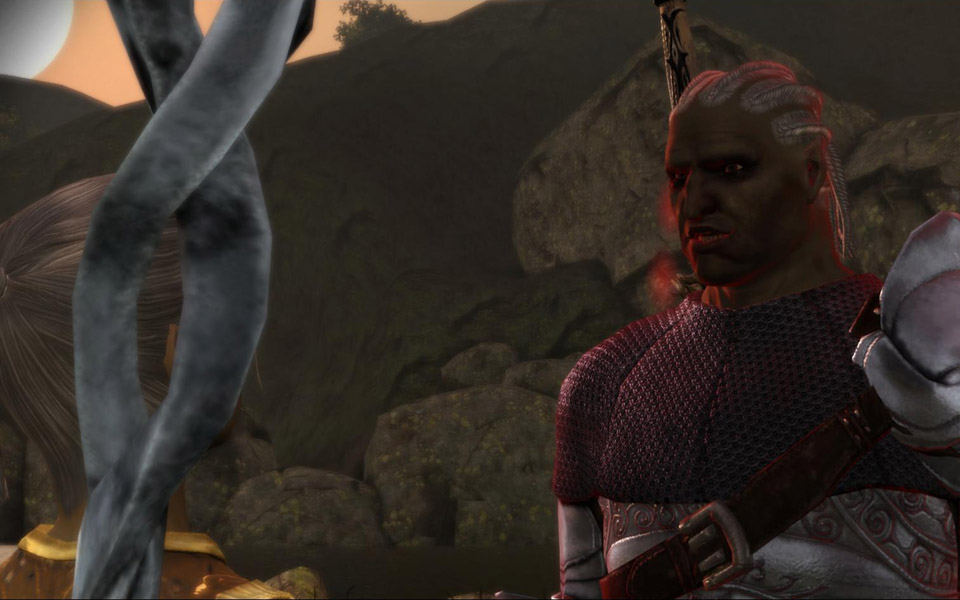
Nameless citizens: the unimportant cast of their own reality

Taking a step up from extras, we have minor characters. These ultimately play very little role in the story, but in an RPG, this character may provide a brief introduction to a situation or offer the player a small sidequest. From this level of character upward, my basic litmus test for a character is fairly simple, and involves looking at the character's desires or primary goal. Ask yourself two questions: What does this character want? Why do they want it?

If you can't answer those two questions, then your character is probably in need of more design. Now, obviously for more complex or prominent characters, you're going to need more details, like behaviour, upbringing, personal morals, and much more. But for a basic character to act coherently within a game, you need to know the answer those two questions. If you can't then they probably can't interact with the character in any meaningful way. If you can, then that's potentially all you need for a simple quest-giver NPC. Do you really need a full backstory for the mother who wants you to look for their child? Or for the bartender who wants you to get rid of the thugs from his bar? These characters have simple desires and simple goals, and there's really no need to develop them further than their role in the game requires.

Please kill the monster, I'm too scared to do it.

On the other hand, we have major NPCs. Characters crucial to the plot, antagonists and party members. These characters should have some really solid development behind them, including history/backstory, personality traits, speech patterns, like and dislikes... basically a full biography and profile. If these characters are meant to grow, develop and shine as three dimensional characters, they have to have conflicting elements to their personality, individual components that come together to form a cohesive individual who has the potential to mature throughout the game's narrative.

Now, this isn't to say that characters have to change their personality during a game, even though I love that as a concept. But a character should grow and develop into a fully formed creation as the adventure progresses. The player should gradually learn more about important characters as the game progresses, as new information and experiences present their character in a new light or expose different facets of their personality or background. This applies equally to all major characters, be they allies, companions or adversaries. Companions don't immediately divulge all their secrets to you upon meeting them, and there is no mystery in the enemy whom you fully understand from a single encounter.

Where's the fun in Sten telling you everything at once?

Of course, there will be plenty of characters that fall in-between the extreme of "major character" and "side quest NPC". At what point do we cross the line and require more details for those characters? How far do you go developing a backstory for someone who is a catalyst for some events but will ultimately fall by the wayside? This is when I go back to my litmus test. For each significant action that a character is taking, you need to know why they are making that action. The small time villain serving the player's ultimate enemy needs to have a reason to support his master, but they may also need their own motivation to want to kill the player character. Now, this could be as simple as wanting to please their master and assume a higher rank in the Nebulous Evil Organisation, or it could be something a lot more complex.

Deciding what makes characters the way they are is part of the fun of writing. For the player, finding out about those characters helps to make the journey fun. It can be a lot more fun to defeat a game's villain if you're doing it with people who feel like they are your friends. If players have insight into the personality of the characters they are dealing with (whether on friendly or unfriendly terms), it makes for a much more enjoyable narrative, which consequently should deliver a better game.

Saturday, August 14, 2010

Wait, I've heard that before...

I listen to a lot of soundtrack music while I'm doing modding, as it feels like I'm more in the right setting or mindset. Outside of modding is an entirely different story...

Anyway, I've heard a few tracks and have noticed some rather curious, uhhh, inspirations? Or perhaps they are homages to the original material. Here are some YouTube links for your perusal...

Even the comments on the second point out the obvious similarities.
Klaus Badelt: He's a Pirate vs Two Steps From Hell: Racketeers.

Another "homage" to the original Pirates of the Caribbean soundtrack...
Klaus Badelt: Fog Bound starting around 1:00 vs Xardas Indoor Tower: Gothic 3 from around 0:15

Lastly, we have Jeremy Soule plagiarizing referencing his own work...
Mhenlo's Theme: Guild Wars from 1:00 vs Forest Day 1: Neverwinter Nights from 0:50.

I would also swear that Gwen's Theme sounds extremely similar to music from Oblivion. In particular from around 0:28-0:55, but I can't quite seem to find the equivalent passage from the latter's soundtrack.

Saturday, July 3, 2010

Formula: A Double Edged-Sword

I now interrupt your recently scheduled blogpost series on antagonists to bring a discussion of predictability in RPG design...

When I'm playing a BioWare RPG, I'm aware that there are certain design considerations and rules that they tend to stick to. I know at the start I'm going to be forced down a linear path, before I get the opportunity to pursue one of several quest lines and have the freedom to explore them or anywhere else in the game world. Upon completing those quest lines, and/or doing something else afterwards, I'm going to be forced down another linear path which will bring the game to a close. Typically, as part of each of those major quest lines, I'm going to have to make a "significant" decision which will affect the game some way in the future.

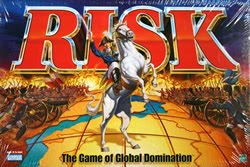
I love BioWare games, and I'm not saying that all their games are the same, despite this (Spoiler warning for this link) tongue in cheek BioWare formula chart, but... there is a certain degree of mystique that's lost on me while I'm playing them now. I know their modus operandi, and while I believe it's a very effective format for giving the player control over the progression of the story and their character, I can't help but feel that they are a little hamstrung by it when it comes to their veteran fans. For new fans, or those not familiar with their format, I imagine Dragon Age is a fairly jaw-dropping proposition. I love it, but even on my initial playthrough, there was something lacking that I couldn't quite put my finger on at the time. What was missing? Risk.

No, not that type of Risk.

What do I mean by "risk"? I always felt "safe" playing the game. Whenever I was about to make a major decision, it felt as though it was telegraphed to me in a notable fashion... almost like I had someone from BioWare standing over my shoulder saying: "look, we're getting you to make another important decision. Think carefully, because it's going to affect things later on." The issue isn't the gravity of the decisions and their consequences, because they are great, but just the fact that as a player, I typically knew which decisions matter and which didn't because I was familiar with BioWare's style.

(Dragon Age spoiler warning) In my first playthrough of Dragon Age, I went straight to Redcliffe and fought my way to the castle. Here I was confronted with a decision to use Blood Magic (which would result in his mother dying) or go to the Circle of Mages in order to save a boy from demonic possession. So I saved the game and decided to head to the Circle, despite the warnings that something bad may happen in my absence. The problem is, as a player, I know I will have time. I know BioWare won't screw me over by having the boy die or something else happen to him while I'm gone. I know that isn't a decision that will actually matter, because I know BioWare's style. (For those who are curious, no, I'm not trying to be Dak'kon here.)

There wasn't a time limit? Actually, no, I'm not surprised.

Even though it would have been annoying for my character's noble intentions to have the boy die, and also for me because I love being able to create the "Hollywood happy ending", I would have loved it even more if I'd been wrong. If he had died or something terrible had happened while I was away because I took too long, even despite some small annoyance and not being able to make everything perfect, the impact of that failure would have been fantastic. (End spoiler) I love being a goody-two-shoes, but at the same time, I really do appreciate when a game makes it really difficult, or even impossible for me to do that. I do like tragedy in games, as long as it makes sense - again, that was the massive failure of Fallout 3.

On that note, Bethesda has a problem with formula too, but I find its main problem is your insignificance in the game world. Throughout Morrowind, Oblivion and Fallout 3, you do all sorts of incredible deeds, be they good or evil. Some of them are extremely public, but due to the scale of the games, nothing really matters that much. It's not possible to cater for choice and for to have a real effect, so you're left with a drops in the pond approach, where you gain points of fame or infamy which can potentially have small effects when you reach a certain level or either. Thus you get a generic reaction to your behaviour, but without a specific reason. The points/rankings that are glaringly displayed on your character's information screen, make it feel like an arbitrary measure applied to you rather than as a genuine reaction from characters based on rumours and your reputation.

 Jesus loves me, this I know... cos my Pip-Boy tells me so...

So formulas are great in that they help players know what to expect from a game, and provide a valuable means to provide an interesting and enjoyable gaming experience. However, the danger is that they can lose that magic appeal. Games should place players in unexpected situations from time to time. Players should be forced out of a comfort zone and given something that is a great shock to the system and out of the ordinary. Alpha Protocol does this brilliantly with its dialogue system, forcing the player to react immediately, but in some circumstances it ups the ante even further, because it springs a snap decision on you in completely unexpected circumstances, or forces you to re-analyse a course of action immediately after presenting you with new evidence.

So what I am asking for? I'm asking for the designers to give us something different each time. I'm asking them that instead of tinkering around the edges of their design, smash some of our preconceived notions of their style and produce a curve-ball every now and then. I'm looking for big decisions sprung on you unexpectedly, or seemingly minor decisions coming back to haunt me later on in the game, or otherwise have something break the mould of their usual style as presented to players. Yes, I know, I'm being an unreasonable and demanding gamer, but I want to feel that sense of insecurity that stops me from unconsciously bringing my knowledge as a player to my gaming. Please take gamers out of their comfort zone... it is a lot more fun for them that way, even if they hate you for it initially.

Friday, June 18, 2010

NPC Interview: Keldrin

Now it's time for a brief interview with one of the NPCs of The Shattered War...

Who are you?
I am Keldrin, mage and Grey Warden, at your service.


Where did you grow up?
I grew up under the yoke of the Chantry, feared and ostracised by them and their Templars.  But I do not hate them unlike so many others.  They do what they do because they rightfully fear the power of magic.  They see the potential for great evil and malice, something that exists in the hearts of most. But it is only mages that command the ability to destroy so quickly and capably should they turn their magic to violent means. Yet, I still pity them for being so bound by that fear.

That doesn't sound like a pleasant childhood.
I was cared for by some and feared by others. When a watchful eye is cast upon you at all times, it is hard to be truly happy. Is it any wonder that some mages rebel under the strain of such constant scrutiny?


How did you join the Grey Wardens?
I was seen to have the skills and strength to become one of their number. If you are expecting some grand story of betrayal or death, then I am afraid I must disappoint you. Though I have seen much of both since joining the order...

A more personal question: How would you describe love?
Love? I hardly consider myself an expert on the matter.  Yes, I had have dalliances in the past, but I would not say I am experienced. It is not something that can be described in a simple manner, nor should it be. Who am I to attempt to better the poetry or song of great Orlesian bards? A Grey Warden has little time for love, for death may be around any corner. But we must sacrifice our lives to fight the evil that has plagued our land for many generations. Should we be expected to sacrifice the humanity of our emotions as well?


Thank you, Keldrin.
And thank you. I hope that we shall see each other again.

Saturday, May 15, 2010

Replayability Factors

Following on from my last post on the replayability of games, I thought I'd raise two key factors I see as helping or hindering the chances of someone playing through a game again. As with my last post, these are simply my thoughts - so if you disagree (or agree!) then I'd love to hear your opinion.

Choice
For me choice, closely times in with consequence. If you make a choice, but there are no real consequences as a result of that choice, what was the point in making that choice? Now obviously there are certain things that have to be set in stone. Game engines can't dynamically create content to react to the player; there are going to be certain antagonists that we are going to have to fight, certain key plot points we have to experience. Yet the player will still be given choice in terms of their dialogue of how they wish their character to react to these events.

So we have the "roleplaying non-choices", the decisions in dialogue which ultimately have little effect on the overall game except for allowing the player to accurately represent the personality of their hero. These are still essential to a game, because they allow the player to empathise with their character, to really get into that "role" that they are playing. Admittedly some people just play (a hero version of) their own personality, but being able to dictate the character's tone when talking to people is a big part of making the overall roleplaying experience more believable and immersive.


But what about real choices? Deciding which faction to side with, whether to break the law to kill a villain or spare them, or choosing to save one friend instead of another. For me, these are the choices the have an effect on the game world that truly add depth to an RPG and make me want to replay it. The ability to change a world through my actions as a hero (or anti-hero/villain, should I so choose) adds a great deal of interest to me as a gamer. When these choices subsequently have an effect on the plot later on, that is even more potent.

Length
I find that one counter to the replayability of a game is its length. Now, complaining about a game being too long is something that seems ridiculous, because gamers typically want "MOAR!" of everything. I confess I love a long game. I love being immersed in a vibrant game world for hours and hours on end as I explore everything and read every bit of information I can find.

So when as a player, I'm investing many dozens of hours in a single playthrough, it becomes harder and harder to replay each time. When there are long segments of the game that are always the same and there is very little choice about the order in which you can perform a task, or the events that occur within (e.g. The Fade in Dragon Age), then it is less enjoyable to replay. Length can diminish choice, which is ultimately a big part of what makes modern RPGs enjoyable for many people.

This isn't to say I'm advocating having shorter games. I love getting content. But say we had a professional game studio release an RPG with a game that took about 12 hours to play through. Then add in lots of choices and decisions within the game that could cause it to progress down an entirely different path. What if the plot could potentially change between playthroughs? What if, in your second playthrough, the villain was actually a complete different character because of a decision you made early in the game? Now that sounds like a replayable game.