Tuesday, December 28, 2010

A little less conversation, more vegetation please

Conversation writing has taken a little bit of a backseat to the level design process over the past couple of days. I've individually placed and adjusted over 4100 trees, shrubs and grass tufts, making sure that none of them are floating above the ground and all of them are "just right".  So here's the requisite "show-off screenshot" to demonstrate a small segment of the now fully-decorated level.

Running in a winter wonderland

In other development news, I've completed another significant portion of the main quest line of the game. This was a particularly time consuming task, as it involves numerous choices which can greatly affect the way events can pan out. My current rough progress for a few key items looks like this:
  • Level Design: 45%
  • Main Quest: 35%
  • Side Quests: 30%
As such, there's still quite a way to go, but there's already a lot of content and material for players to experience. Keep in mind that this includes many decisions that can be made which have a real and powerful effect on the story, its characters and the ultimate conclusion and aftermath. Death, betrayal, love and triumph may all play a part in The Shattered War, but it will be up to you to determine how these events play out and whether you will pursue a path of kindness or vengeance.

Shoryuken bear

I'll leave you with the above gem that I took while trying to grab a screenshot to showcase my vegetation placement. It doesn't really show off the level that well, but it does show the intrepid hero in a little bit of a trouble...

Thursday, December 23, 2010

Professional failures

Modders sometimes draw outrage for not producing content that is quite "up to scratch" when compared with commercial games. However, sometimes I feel like professional developers need to do a bit better. With the recent bonanza of steam sales where games have been going on sale for ridiculous prices, I've made a few purchases. There are two titles that have raised my ire.

The first is Prince of Persia 2008. I'm not going to complain about the disconnect with the Sands of Time Trilogy, the new art direction, or anything like that, in fact I'm not actually qualified to talk about that, because I've barely played it. My complaint is technical, pure and simple. I fired it up and was presented with an entirely invisible world.

That's the prince in front of a cliff... supposedly

None of the textures appeared. They were all invisible. Having a Radeon 4850 with 512Mb DDR3, I was a little confused, as it should have more than enough texture memory to be able to cope with anything the game could throw at it. However, the shameful thing here was when I went searching for technical support. Ubisoft's support section had no articles whatsoever associated with the game. None. I've never encountered a game with no bugs, so I was more than a little surprised. So I sent a message to their technical support to find out how to rectify the problem.

Aside from the usual "update drivers/DirectX" suggestions (which I'd already addressed in my request) I was told that the game was not officially supported on Windows 7 (though it is on Vista) and that I should try to fix the problem using compatibility mode. It didn't work, but really... Windows 7 unsupported? I eventually "fixed" the problem by turning anti-aliasing off and dropping the graphical quality to "medium" instead of high... I'd be curious to know what differences that makes to the quality of the graphics. I suppose at least I can play it now, but I'm more than a little disappointed.

The other game I need to level a complaint at is Burnout Paradise. This one is simple. Let me exit the game. Pressing the ESC doesn't bring up a menu that allows me to quit the game. It brings up an information window. I don't care if you're porting a game or not. When the player hits the ESC key, they should get the main menu of the game, allowing them to do things like:
  • Resume the game
  • Save/Load the game (if applicable)
  • Configure controls
  • Configure sound/graphics options
  • Quit the game
Instead Burnout gives you this:

Huh? Where is my menu?

So based on that screen, you have to somehow realise that pressing F1 and F2 will rotate through different screens - apparently the small arrows next to the F1 and F2 keys are supposed to indicate this. Nevermind that you get a message down the bottom saying "F2 Burnout Store" as though hitting F2 will always take you to the Burnout store. It also takes at least three key presses to get to the "real" main menu, and you have to wait for each new screen to flip and display completely before you can move to the next one.

Yes, these are small things, but they add to the failings already present to cause some moderate aggravation. Navigating a UI should not be time consuming. It should be as quick as possible so that the player can get back to doing what the designers should want them to be doing - playing the game. I'm afraid I don't see any acceptable excuse for UI design this bad. Hitting ESC should give you a main menu. It's that simple.

Monday, December 20, 2010

An IGNoble disgrace

Regular readers of this blog will know that I hate console wars or console versus PC zealotry. Each platform has its own strengths and weaknesses, and using individual games to compare them (and say "this one is the best!") is something I generally consider to be a sign of fanboy postulating. So when I saw a "professional game website", which IGN claims to be, doing a (please don't click this link, for reasons I will explain) head-to-head video comparison of Mass Effect 2 on XBox360 and PS3 and sparking a raft of "PS3 is so much better" claims across various other websites, I was a little disappointed.

A still from the video (PS3 left, XBox360 right)

You can click the two images in the post for a higher resolution image. But, just taking a quick look at the above shot, it looks like the PS3 version has better contrast and colour saturation. That was my overall impression from watching the video, which struck me as an odd thing. Now, there might be some graphical differences between the two consoles but I knowing the Unreal Engine and its precalculated lighting for static surfaces, I wouldn't have thought the differences would have been quite so noticable as they are in this video. I would have attributed to the game being run on a different television, but I would hope for IGN's sake that they created the two videos using the same television so as to remove such bias.

Unfortunately, I'm not sure that I can even give them that much credit, because their comparison seems to be wholly unreliable. Check out the screenshot below.

What is that? (PS3 left, XBox360 right)

Now, aside from the slight difference in the position of the frame for both the screenshots here (that's right, they're slightly out of sync), there's some serious frame-blurring present in the picture on the right. If you take a screenshot from a game, it shouldn't end up blurred - and particularly not to the great extent that can be seen in this shot. Go pause a gameplay video from a console game and see if you get blurring. If it's a high quality video, you won't. If it's not... well, guess what can happen?

This "comparison" appears incompetent at best, and blatantly biased at worst. It appears that these are two videos of different quality placed side-by-side in a console comparison - if IGN demonstrated that they produced these videos on the same television using the same video resolution and compression, I'd happily retract this post. But as it stands, their video appears to be nothing more than a shameless attempt to garner website hits by provoking a console flame-war.

I expect more from gaming sites that claim to provide "video game journalism", as should every person who relies on these sites for a supposedly unbiased and objective analysis of games.  Shame on you, IGN.

Sunday, December 19, 2010

Narrative needs more than gameplay

So before reading today's blog post, I'll direct everyone to watch this video.


Done? Okay, now I have to say that I pretty much disagree wholeheartedly with their argument.

Admittedly I was fairly young when I played missile command - I believe I actually played one of its clones on a BBC Micro rather than the original game itself, but the mechanics were exactly the same. Now, the creator might have intended the game to be a reflection on the futility of nuclear war, and impart the gravity of the situation on the player, but I didn't get it at all. And funnily enough, I could go back now and have exactly the same reaction. If that was the intention of the creator, then all credit to him, but I'm afraid it didn't work.

As far as I was concerned, I was protecting moon bases from being blown up from alien attack. There was no moral dilemma inherent in the game of me deciding between whether to sacrifice the lives of the few versus the many or protecting civilians versus missiles bases. The game for me was reduced entirely to an arbitrary defense game that had no grave moral implications or story, and certainly didn't make me go away feeling emotionally beaten at the harsh reality of fighting a losing battle. I typically came away frustrated because I'd lost or failed to shoot down a particular incoming missile. That was it. Any stress or tension was only borne out of the mechanics themselves rather than any narrative behind them.

I don't argue that narrative can't be assisted by gameplay mechanics, but I would argue that it is impossible to provide good narrative solely through gameplay mechanics. Gameplay does not tell a story, it allows a player to tell their own story - which may be vastly different from the story that the designers had in mind. Obviously there were vast technical limitations in Missile Command's day that meant that it wasn't possible to deliver the same level of storytelling that we can today. But could we read a similiar amount of story into Asteroids? Geometry Wars? How about Minesweeper?

I maintain it is not possible to deliver a consistent narrative purely through mechanics. Without some supporting evidence, creator is providing a framework for interpretation, not a narrative. What is the narrative of The Mona Lisa? Or the Venus de Milo? How about a photograph of Omaha Beach?

This might tell a story, but a different story for everyone

If a "narrative" is delivered by gameplay alone, the designer is not telling a story, they are letting the player tell their own story - and this is an important distinction. While the latter situation could potential make the player feel more involved in the game because they're using their imagination to make it more personal, this is not because of the designer's skill in delivering narrative - because that's exactly what they aren't doing. A designer can't tell a consistent story without stating some things explicitly.

A player can fill in a lot of gaps in a story, and generally when the player is told less about a story within a game they'll "fill in the blanks" more between the pieces of the story they are told. The human brain loves stories, and likes to string events together using them, but in order for this to happen the players must be told some story. This must be done if the designer wants a solid and consistent narrative to be delivered to their audience. Without any sort of explicit narrative, the player is just playing a game to achieve goals rather than as part of a story or more cohesive experience, which I'd contend is just about as far away from art as one can get.

Saturday, December 18, 2010

Sharing is Caring

One thing about creating mods for games is that it really heavily relies on the game's player and modder community. Without players, modders would not exist.  It's that simple. Most modders love the creative process of modding, but if there is no player base to experience their content, then the endeavour will ultimately feel flat.

But a modding community also relies heavily on the modders themselves sharing and supporting one another.  By providing support to other people attempting to create content for the game, they often discover possibilities that the designers themselves may not have explored, or workarounds for issues that may or may not have been present in the original workflow of official designers.

Barcode trees. I bet BioWare didn't have to deal with these.

They can also help advertise and support the publicity of other modules - some modding communities have modders attacking or openly criticizing one another, which typically just ends up fracturing the community and resulting in lower quality modules being released. I believe the adage goes: If you hate something, tell the creator, if you love something, tell everyone.

It also allows people to share content to help modders create their own works.  This has been the case with Semper's level pack, which contained several level areas ready for modders to use.  Having previously released my own hillside village for the first Community Contest, which has since been used in the Dirge of Coldhearth module, I'm a strong supporter of helping other modders.  Semper's level pack is a fine example of this, and his village level immediately took my eye as something that I could potentially use for The Shattered War... it meshed beautifully with some ideas I'd already had for one area.

So let's get down to the bit that everyone wants to see... it's screenshot time!

Exploring the modified town

I've done a substantial amount of retooling, modifying structure, appearance and the general layout and accessibility of the level, but still spent far less time than what I would have had to do if I'd made the level from scratch. There's still some additional work to be done, and I haven't really added the population of the town as of yet, but it is definitely a great addition to The Shattered War.

Wednesday, December 15, 2010

Achievement Hazard

Achievements can be an interesting means to encourage player dedication, albeit at the severe risk of alienating and annoying your player.  They inspire the desire to "achieve" by earning that digital stamp that indicates you've managed to meet certain requirements, but occasionally all they do is infuriate.  Just tonight I've fallen prey to that exact failing of achievements.

The Great Steam Treasure Hunt is an ingenious marketing invention to encourage people to buy games on Steam and general encourage players to sample, buy and persevere with games.  However, my current ire lies with an achievement called "Beat it", which is earned from playing the game Beat Hazard. I'll happily admit that this post flies fresh from the anger of playing the game, but given that it's inspired such an emotional and annoyed response from me, it's definitely done something wrong.

Beat Hazard is what you'd get if you crossed a psychedelic asteroids (say Geometry wars on acid) with Guitar Hero. Enemies, weaponry and even bosses are all generated based on the music that is playing - be it the included music, or that which you have on your hard drive. On the surface, it does appear to be a fun, albeit challenging game, and I might tentatively recommend it as a cheap buy for someone looking for a game in that vein. However, the game's steam achievements, the treasure hunt and a few design aspects have inspired a severe dislike of the game for me this evening.

Yes, it really is that gaudy

The steam achievement for the competition requires that you score 3,770,488 or more in a single "survival" game, where tracks continue to play indefinitely until you eventually run out of lives. You've got three lives in which to achieve this score. I expected this to be a bit of a challenge, but surely nothing that I couldn't manage. Most of the other achievements have not been overwhelmingly difficult, and I couldn't see this being any different. Having a look at the game's steam achievements, you have ones for scoring 1,5 and 10 million, and surviving 5,10,15 and 20 minutes in survival mode.

Unfortunately, there were three problems that I encountered:
  1. The game itself is not entirely stable. There appears to be a known issue with the ATI48xx family of cards in which the game will crash to a black screen, and require a reboot in order to recover. Not exactly ideal in the middle of a lengthy survival game.
  2. The game has a "level" system, where the player has a rank based on a cumulative score that unlocks rewards to add extra multipliers, bonuses and lives.
  3. The score 3.7 million appears quite challenging to achieve - I managed an 8 minute game that netted me a score of 1.5 million.

Now, I don't expect every achievement to be easy to obtain, but the combination of factors involved here have caused me to get very annoyed at the game. Stability issues requiring a hard reset in order to fix are pretty much unacceptable, even from an indie game.

So I could kill this... then crash a minute later

But I'd argue that the "rank" system is the worst design flaw involved. When each game is most definitively stand-alone, having an on-going tally that rewards you simply for perseverance is not good game design. This is grinding at its worst. It's grinding to gain "bonuses" that realistically would be required to achieve some of the more demanding steam achievements with the game - and most likely the achievement for Steam's competition itself.

Grinding points simply for the sake of being able to grind more points is the completely wrong way to go about achievements. Achievements are supposed to be fun, and you shouldn't ever feel like you must play a game in order to be able to play it properly. Bonuses should be unlocked for doing something special, not simply for playing the game for long enough. Moreover, and bonuses provided by achievements should be definite bonuses, not merely something in order to make the achievements that are posed with the game attainable. Rewarding skilled players is very different from punishing new players; it gives a sense that you're making progress because of your skill. Beat Hazard unfortunately does the opposite, making you feel somewhat ostracized for not having played it enough. 

However, the absolute worst choice that was made that exemplifies how achievements should not be created are the utterly terrible achievements that are granted for playing the game for 1, 5 and 10 hours. These should never be achievements because a player should never ever be made to feel that playing a game for a set period of time is an achievement. If you're having to encourage a player to persevere with your game by adding such time-based achievements, then you absolutely need to reconsider the design of your game.
Tuesday, December 14, 2010

Why Side Quests? (Part 2)

In my last post I discussed the potential drawbacks of sidequests within games. Again, nothing that they are almost exclusively an RPG phenomenon, let's look at the ways that they can be used to enhance a game.

Provide Rewards
People love getting presents, and rewards in games are presents for achieving something. You mastered a gameplay skill? Reward. You completed a difficult task? Reward. The game gives us something for achieving a task, and because of that, we want to achieve more. Now while this is useful technique to keep players engrossed in a game, taken to extremes this can actually destroy the player's enjoyment of the game. How many people find monster-killing grinding in an MMO fun? I'd imagine not many, but it's the reward of new levels and loot that keeps the player going even though the actual activity itself can feel very tedious.

Done right, rewards are a great benefit of sidequests. They make the player feel like they have achieved something, and give them the power to deal with situations with slightly less difficulty than they otherwise might. Having more experience or better weapons to dispatch enemies makes the player feel like their efforts were worthwhile in the long term as well as giving them the immediate benefit of a reward.

The Big Metal Unit - A series long sidequest to "become" a golem

Add Depth
Sidequests are great for fleshing out additional characters or the gameworld in general. For those that care to get involved in the fiction and reality of a gameworld and its people, these are an excellent means to explore aspects that might otherwise be relegated to simply text in a codex entry/journal/book. Providing the player with an interactive experience that allows them to see this content first-hand can be infinitely more powerful than simply reading about it.

In Morrowind, the player could find read about the importance of creatures called Kwama to the economy of the island. Alternatively, they could experience the trials and associated dangers directly by accepting a quest to cure a Kwama Queen of blight. By getting involved in this quest, the player got a far greater sense of the stakes involved and the potential effect of having an infected Queen.

An infected Kwama Queen - she's bad for business

Allow Choice
Presenting a counterpoint to the importance and consequences relating to sidequests, providing the player with choice is actually a great benefit to a game. The core plot of a game has to have a relatively linear plot, because a completely free and branching story would either take far too long to create or likely have a weak narrative. As such, sidequests are where the player should get a lot more leeway in terms of dealing with situations and taking matters into their own hands.

Take the Paranoia quest in Oblivion, where a man named Glarthir is convinced people in the town are spying on him. You can refuse to help him, have him attack you by denying all his accusations, kill the "spies" for him, turn him into the guards, or even watch as he attempts to kill each of the people he believes are spying on him. This wide variety of options for dealing with the situation makes the quest an interesting proposition (above and beyond that provided by Glarthir's insanity).

Explore Creative Gems
As a designer, side quests are the perfect outlet for "creative gems". These are the little ideas that designers have that they want to try out or explore, but they aren't substantial enough to warrant a full plot. A melting pot of mechanics and stories, sidequests can offer a great deal or variety and interest to a player's gaming experience. Anyone who has ever enjoyed playing an RPG will have sidequests that they remember fondly. Whether besting Sir Roderick Ponce von Fontlebottom the Magnificent Bastard in a battle of wits in Jade Empire, or causing havoc in a "Murder Mystery" in Oblivion, there is an enormous amount of fun to be had from sidequests.

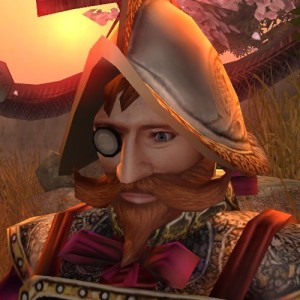
Sir Roderick Pon... err, John Cleese.

So now we've had a look at both side of the coin - examining both the good and bad about sidequests. They add a lot to RPGs when they are done well, but can detract from the experience if implemented poorly. Knowing the benefits and potential drawbacks allows designers to maximise the impact of their sidequests to improve both a game's narrative and mechanics.