Today's post is an announcement for The Shattered War!
There's a new high resolution (720p) teaser trailer out to whet your appetite for the adventures in store for all players. I've set this post to display in a resolution of 480p by default, but please increase it to 720p if you want the best possible view!
Enjoy and spread the word!
Monday, September 26, 2011

Hacking minigames
A well executed mini-game is a great way to break up the gameplay patterns and introduce variety into a game for a player. If done well, it can add to the player's immersion and offer an additional small set of mechanics or strategies to master to complement the overall game. However, a mini-game that stylistically and aesthetically matches the overall tone of the game and the theme of the mini-game itself is excellent.
To that end, let's quickly analyse a few "hacking" minigames across different titles. While hacking by necessity limits itself to titles involving technology, there is still a wide variety of games and mechanics that have been implemented by developers. In a break from my normal tradition on analysing game design, I'm going to grade each out of 5 on three elements:
Style - How much it matches the "theme" of hacking. Do the aesthetics and gameplay make it feel like the player is "hacking"?
Theme - How well does it match the overall theme and aesthetics of the game? Does it feel like a coherent part of the overall game?
Gameplay - How do the mechanics of the minigame play out? Does it provide the player the opportunity to break up regular gameplay and master a (set of) game mechanic(s)?
Some of the numbers I provide might be a little controversial, but I'm including them as my personal subjective measure of the success of various components.
BioShock
Here is a mini-game that demonstrates an superb connection with the overall aesthetics and style of the game. The pipemania style mini-game to connect the start node to the end node matches the water themes of the game with commendable skill, and provides an enjoyable (and arguably proven) game mechanic to keep people interested. Player upgrades to increase the skill with hacking augment the connectivity with the overall game without hindering the core gameplay of the minigame.

Its main weakness is that this immediately recognisable mechanic does little to ingratiate itself with the idea that the player is "hacking" a machine. The player is quite clearly playing a "connect the pipes" game rather than anything that has a clear connection with the idea of hacking a device. The other weakness in the gameplay of the minigame is because of how repetitious and tedious it eventually becomes. However, this is technically not a failing of the minigame itself, but a failing of the game for the number of times it makes you perform the hacking minigame.
Style: 1/5
Theme: 5/5
Gameplay: 5/5
Fallout 3
Fallout 3 gave us "mastermind" as a hacking game. If given a group of words, pick the correct password over a series of guesses, where the player is told the number of letters they have in the correct position after each guess.

Initially, this seemed like an excellent mechanic, but it did not take long for it to break down. While the presentation was quite good and help impart the feel of a broken civilisation with broken computer terminals, the construction of the minigame itself was shallow and quickly predictable. Players quickly learned how to approach the fairly simple problem and could almost guarantee success every single time. It had all the repetitiveness of BioShock's pipemania without the associated skill requirement or time limit.
Style: 2/5
Theme: 3/5
Gameplay: 1/5
Mass Effect 2
Mini-games are one of the weak aspects of the Mass Effect series, and ME2's hacking mini-game doesn't really do much to buck this trend. It's simple symbol matching exercise on a scrolling grid, with a time limit and "danger squares" that can hinder the player's progress.

Aesthetically and stylistically it matches the overall feel of Mass Effect 2 quite, and potentially gives the player a vague "hacking" feel. However, it's a fairly lacklustre mechanic on the whole. There is a small degree of skill in its execution, but nothing that feels terribly taxing or engaging. Admittedly it's better than the bypass mechanic or (yuck) planet scanning, but those really don't offer a lot of competition.
Style: 2/5
Theme: 3/5
Gameplay: 2/5
Alpha Protocol
Alpha Protocol presents the player with a large "find-a-word" where they must locate and "lock in" two sequences of characters within a large character grid within a time limit. The trick is that all the characters on the grid periodically change except for the two sequences within the grid. However, should the player take too long, these sequences can "relocate" once during the hack. The difficulty can be surprisingly deceptive, but it can be good challenge.
On a console, each thumbsticks controls the location of one of the two sequences; move the left thumbstick to move the left sequence, move the right thumbstick to move the right sequence. However, if you play on a PC, prepare to be infuriated by a poor control system using the keyboard and mouse, as the reaction of the controls is sluggish and can frequently result in an "incorrect lock-in", which results in a time penalty. This is one case where the PC is vastly inferior in its controls, and I'd deduct 1 (possibly 2) marks from the gameplay score because of this problem. Apart from this issue, this minigame matches both the overall tone of the game and imparts a good "hacking" motif.
Style: 3/5
Theme: 3/5
Gameplay: 4/5
Deus Ex
The aesthetics of the hacking in Deus Ex are superb, as it gives you what effectively appears to be a network layout. It is up to the player to analyse the best options to reach a target node (or multiple target nodes) in order to succeed at the hack. The unfortunate weakness of the system is the arbitrary nature of the gameplay due to the chance element of "detection". Every action within the minigame brings a risk of "detection" by the computer's security system, which immediately imposes a timelimit on the player's actions before they are detected and fail the hack. Nodes can be optionally captured that will assist the hack or provide external benefits to the player, forcing them to weigh up the pros and cons of risking "detection" against rewards like additional money or experience.

The problem with the detection mechanics is that it introduces the problem that there is no (or very little) player skill involved in the success or failure of the hack. Once the player is detected, the minigame degenerates into a click sequence that inevitably plays out exactly the same way each time. A hack can result in guaranteed failure if the player is detected upon their first action, whereas a retry could result in a straightforward success if the percentage chance of detection happens to go in the player's favour. There is an attempt to address this problem through the introduction of "stop worms" (which momentarily stall the detection countdown and hence player failure) or "nuke viruses" (which automatically capture a network node with chance of detection), not to mention player upgrades that increase the character's abilities which are necessary to hack "more secure" systems. Despite this integration that reinforce the concept of having to balance resources that runs through the entire game, these are still band-aid solutions that don't really solve the problem of an arbitrary difficulty.
Style: 5/5
Theme: 4/5
Gameplay: 2/5
While the appraisal of these different hacking mechanics might be an interesting enough topic in and of itself, I'm going to use it as a pre-cursor to a discussion about mini-game mechanics in general. That, however, will have to wait until another blog post...
To that end, let's quickly analyse a few "hacking" minigames across different titles. While hacking by necessity limits itself to titles involving technology, there is still a wide variety of games and mechanics that have been implemented by developers. In a break from my normal tradition on analysing game design, I'm going to grade each out of 5 on three elements:
Style - How much it matches the "theme" of hacking. Do the aesthetics and gameplay make it feel like the player is "hacking"?
Theme - How well does it match the overall theme and aesthetics of the game? Does it feel like a coherent part of the overall game?
Gameplay - How do the mechanics of the minigame play out? Does it provide the player the opportunity to break up regular gameplay and master a (set of) game mechanic(s)?
Some of the numbers I provide might be a little controversial, but I'm including them as my personal subjective measure of the success of various components.
BioShock
Here is a mini-game that demonstrates an superb connection with the overall aesthetics and style of the game. The pipemania style mini-game to connect the start node to the end node matches the water themes of the game with commendable skill, and provides an enjoyable (and arguably proven) game mechanic to keep people interested. Player upgrades to increase the skill with hacking augment the connectivity with the overall game without hindering the core gameplay of the minigame.

Its main weakness is that this immediately recognisable mechanic does little to ingratiate itself with the idea that the player is "hacking" a machine. The player is quite clearly playing a "connect the pipes" game rather than anything that has a clear connection with the idea of hacking a device. The other weakness in the gameplay of the minigame is because of how repetitious and tedious it eventually becomes. However, this is technically not a failing of the minigame itself, but a failing of the game for the number of times it makes you perform the hacking minigame.
Style: 1/5
Theme: 5/5
Gameplay: 5/5
Fallout 3
Fallout 3 gave us "mastermind" as a hacking game. If given a group of words, pick the correct password over a series of guesses, where the player is told the number of letters they have in the correct position after each guess.

Initially, this seemed like an excellent mechanic, but it did not take long for it to break down. While the presentation was quite good and help impart the feel of a broken civilisation with broken computer terminals, the construction of the minigame itself was shallow and quickly predictable. Players quickly learned how to approach the fairly simple problem and could almost guarantee success every single time. It had all the repetitiveness of BioShock's pipemania without the associated skill requirement or time limit.
Style: 2/5
Theme: 3/5
Gameplay: 1/5
Mass Effect 2
Mini-games are one of the weak aspects of the Mass Effect series, and ME2's hacking mini-game doesn't really do much to buck this trend. It's simple symbol matching exercise on a scrolling grid, with a time limit and "danger squares" that can hinder the player's progress.

Aesthetically and stylistically it matches the overall feel of Mass Effect 2 quite, and potentially gives the player a vague "hacking" feel. However, it's a fairly lacklustre mechanic on the whole. There is a small degree of skill in its execution, but nothing that feels terribly taxing or engaging. Admittedly it's better than the bypass mechanic or (yuck) planet scanning, but those really don't offer a lot of competition.
Style: 2/5
Theme: 3/5
Gameplay: 2/5
Alpha Protocol
Alpha Protocol presents the player with a large "find-a-word" where they must locate and "lock in" two sequences of characters within a large character grid within a time limit. The trick is that all the characters on the grid periodically change except for the two sequences within the grid. However, should the player take too long, these sequences can "relocate" once during the hack. The difficulty can be surprisingly deceptive, but it can be good challenge.
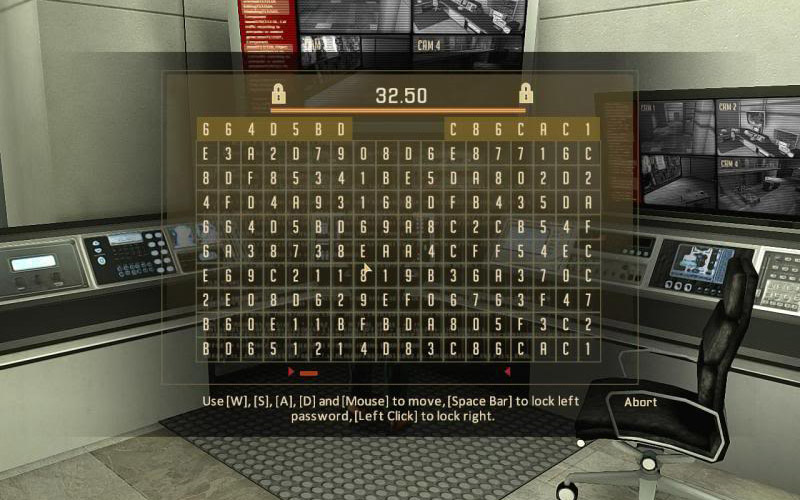
On a console, each thumbsticks controls the location of one of the two sequences; move the left thumbstick to move the left sequence, move the right thumbstick to move the right sequence. However, if you play on a PC, prepare to be infuriated by a poor control system using the keyboard and mouse, as the reaction of the controls is sluggish and can frequently result in an "incorrect lock-in", which results in a time penalty. This is one case where the PC is vastly inferior in its controls, and I'd deduct 1 (possibly 2) marks from the gameplay score because of this problem. Apart from this issue, this minigame matches both the overall tone of the game and imparts a good "hacking" motif.
Style: 3/5
Theme: 3/5
Gameplay: 4/5
Deus Ex
The aesthetics of the hacking in Deus Ex are superb, as it gives you what effectively appears to be a network layout. It is up to the player to analyse the best options to reach a target node (or multiple target nodes) in order to succeed at the hack. The unfortunate weakness of the system is the arbitrary nature of the gameplay due to the chance element of "detection". Every action within the minigame brings a risk of "detection" by the computer's security system, which immediately imposes a timelimit on the player's actions before they are detected and fail the hack. Nodes can be optionally captured that will assist the hack or provide external benefits to the player, forcing them to weigh up the pros and cons of risking "detection" against rewards like additional money or experience.

The problem with the detection mechanics is that it introduces the problem that there is no (or very little) player skill involved in the success or failure of the hack. Once the player is detected, the minigame degenerates into a click sequence that inevitably plays out exactly the same way each time. A hack can result in guaranteed failure if the player is detected upon their first action, whereas a retry could result in a straightforward success if the percentage chance of detection happens to go in the player's favour. There is an attempt to address this problem through the introduction of "stop worms" (which momentarily stall the detection countdown and hence player failure) or "nuke viruses" (which automatically capture a network node with chance of detection), not to mention player upgrades that increase the character's abilities which are necessary to hack "more secure" systems. Despite this integration that reinforce the concept of having to balance resources that runs through the entire game, these are still band-aid solutions that don't really solve the problem of an arbitrary difficulty.
Style: 5/5
Theme: 4/5
Gameplay: 2/5
While the appraisal of these different hacking mechanics might be an interesting enough topic in and of itself, I'm going to use it as a pre-cursor to a discussion about mini-game mechanics in general. That, however, will have to wait until another blog post...
Friday, September 9, 2011
Encourage players towards mastery
In my last post I talked about the game Darksiders and some of its shortcomings in relation to gameplay. One area that I thought the game was quite fun for the most part was in its fighting mechanics. As a beat-em-up game, it is mandatory that these mechanics be enjoyable. However, there is one significant deficiency in how the combat plays out that fails to capitalise on a potential means to improve it: the game does not provide incentives for players to master of the fighting mechanics.
The immediate and knee-jerk retort to this criticism is that the incentive is "not dying", which is accurate. However, this ignores the vast potential for improvement in the form of player-defined challenge. This is whereby players set themselves goals above and beyond what are enforced by the mechanics of the game itself. In stealth games, it may not just be to survive the level, it may be to do the entire level without being seen. Or it could to an entire level and to leave everything exactly how it was before the player entered - every door opened is shut, any light turned off is turned back on, any item (barring that which the player intends to steal) is returned to its rightful place. Other genres might see the player attempt a "no-reload" challenge, or a speedrun to finish the game in the shortest time possible, among many other possibilities.

These examples push the boundaries of what most players might do, and in the case of speed runs often "break" the normal mechanics of the game. However, the concept of providing players with self-governed challenge above that provided by the game is not only a great way to encourage players to replay a game, but also to improve their skill in the mechanics of the game. For an example, let's compare Batman: Arkham Asylum (B:AA) to Darksiders. In Darksiders, upon defeating an enemy, you claim "souls", typically blue souls, which represent the currency in the game used to buy items and upgrades. In B:AA, you gain experience from defeating enemies, which allows you to level-up and "buy" items and upgrades. The core difference is that B:AA actively rewards you based on how well you have mastered its combat system. Furthermore, it directly tells you what aspects of that combat system you have mastered.
These two games (as with many beat-em-ups) feature a "combo counter", keeping track of how many hit you've strung together in a sequence without missing or taking a blow. However, B:AA rewards the player who has a high maximum combo counter, using more challenging moves, and also for using a variety of different moves throughout the fight. It shows a separate message for each of these in an unobtrusive manner to show to the player how well they did in a particular fight. Furthermore, the "combat challenges" outside of the main story campaign push this concept even further, giving the player a points score based on their success, and allowing them to create a "leaderboard" of their scores and that of their friends.
 How well did you do? Arkham Asylum tells you.
Darksiders on the other hand does none of this. There is seemingly no benefit from generating large combos, and the game provides you no feedback about how well you are doing in combat besides the life meter of your character. It's not even clear whether "instant-kill" moves that the player can do offer any additional benefit aside from killing an enemy quicker than they otherwise might. It does incorporate fighting challenges into the main game, which offer additional souls based on your performance, but it never makes it clear exactly how much that bonus is - the player is merely left to guess how well they may or may not have done. These feel more like "training exercises" to teach the player particular basic mechanics and strategies rather than real "challenges". While this is appropriate given they are a mandatory part of the campaign, they lack the "challenge" of those in B:AA. Furthermore, they can't be repeated as individual challenges outside of the main campaign to allow the player to practice mastering a particular fighting technique or scenario.
B:AA encourages players to master its mechanics, to practice and learn to excel. This sort of encouragement results in greater player engagement, because while they can just "muddle through" with enough talent to get by, most players will want to achieve and gain the rewards that come from increased skill. The key is to tell players what they are doing right, and assign them a clear and tangible benefit from doing so. Simply saying "bonus" without saying why, or worse, invisibly rewarding the player, does not provide them with any incentive to "do well". Additionally, also make sure that this is done in an encouraging fashion. Don't penalise players for doing something wrong, but instead reward them for doing something right.
This encouragement will keep players coming back for more, make them want to improve their skills, master the mechanics of the game, and ultimately make them more engaged with the game - and an engaged and engrossed player is a happy player.
The immediate and knee-jerk retort to this criticism is that the incentive is "not dying", which is accurate. However, this ignores the vast potential for improvement in the form of player-defined challenge. This is whereby players set themselves goals above and beyond what are enforced by the mechanics of the game itself. In stealth games, it may not just be to survive the level, it may be to do the entire level without being seen. Or it could to an entire level and to leave everything exactly how it was before the player entered - every door opened is shut, any light turned off is turned back on, any item (barring that which the player intends to steal) is returned to its rightful place. Other genres might see the player attempt a "no-reload" challenge, or a speedrun to finish the game in the shortest time possible, among many other possibilities.

It's possible to finish Morrowind in under four and a half minutes
These examples push the boundaries of what most players might do, and in the case of speed runs often "break" the normal mechanics of the game. However, the concept of providing players with self-governed challenge above that provided by the game is not only a great way to encourage players to replay a game, but also to improve their skill in the mechanics of the game. For an example, let's compare Batman: Arkham Asylum (B:AA) to Darksiders. In Darksiders, upon defeating an enemy, you claim "souls", typically blue souls, which represent the currency in the game used to buy items and upgrades. In B:AA, you gain experience from defeating enemies, which allows you to level-up and "buy" items and upgrades. The core difference is that B:AA actively rewards you based on how well you have mastered its combat system. Furthermore, it directly tells you what aspects of that combat system you have mastered.
These two games (as with many beat-em-ups) feature a "combo counter", keeping track of how many hit you've strung together in a sequence without missing or taking a blow. However, B:AA rewards the player who has a high maximum combo counter, using more challenging moves, and also for using a variety of different moves throughout the fight. It shows a separate message for each of these in an unobtrusive manner to show to the player how well they did in a particular fight. Furthermore, the "combat challenges" outside of the main story campaign push this concept even further, giving the player a points score based on their success, and allowing them to create a "leaderboard" of their scores and that of their friends.

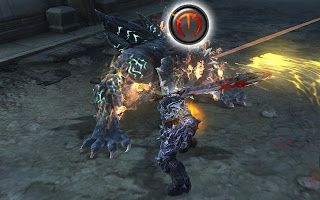
Darksiders on the other hand does none of this. There is seemingly no benefit from generating large combos, and the game provides you no feedback about how well you are doing in combat besides the life meter of your character. It's not even clear whether "instant-kill" moves that the player can do offer any additional benefit aside from killing an enemy quicker than they otherwise might. It does incorporate fighting challenges into the main game, which offer additional souls based on your performance, but it never makes it clear exactly how much that bonus is - the player is merely left to guess how well they may or may not have done. These feel more like "training exercises" to teach the player particular basic mechanics and strategies rather than real "challenges". While this is appropriate given they are a mandatory part of the campaign, they lack the "challenge" of those in B:AA. Furthermore, they can't be repeated as individual challenges outside of the main campaign to allow the player to practice mastering a particular fighting technique or scenario.

Do I instant-kill or not? I don't know; the game doesn't tell me!
B:AA encourages players to master its mechanics, to practice and learn to excel. This sort of encouragement results in greater player engagement, because while they can just "muddle through" with enough talent to get by, most players will want to achieve and gain the rewards that come from increased skill. The key is to tell players what they are doing right, and assign them a clear and tangible benefit from doing so. Simply saying "bonus" without saying why, or worse, invisibly rewarding the player, does not provide them with any incentive to "do well". Additionally, also make sure that this is done in an encouraging fashion. Don't penalise players for doing something wrong, but instead reward them for doing something right.
This encouragement will keep players coming back for more, make them want to improve their skills, master the mechanics of the game, and ultimately make them more engaged with the game - and an engaged and engrossed player is a happy player.
Monday, September 5, 2011
Don't Forget Fun
A while ago I played through Darksiders, a beat-em-up where you play the role of "War", one of the four horsemen of the apocalypse. Now, while the writing most definitely fell into the mediocre category, the game on the whole was quite fun. However, there were design aspects that meant the game fell far short of what it could have been.
Part of the problem with Darksiders is that it cobbles together a whole bunch of ideas from different games. Platforming and puzzles have become standards in the modern beat-em-up, and the Prince of Persia series was great for mixing these aspects together with beat-em-up combat. Darksiders does okay in this regard, but its shortcoming is that the game is schizophrenic in its presentation and design. You have completely new abilities and mechanics dumped upon you as the game progresses, but few of these mesh well together. You get a gun, then a horse, then a grappling hook, then a portal gun, then "see invisible" mask, and a few other goodies besides. All these things might be interesting in their own regard, but they simply don't work well together and force you to engage with new mechanics which are used for a period and then largely abandoned.

Worse still, some of these mechanics become tedious. Playing portal in Darksiders for the most part requires little thought or puzzle solving, for all the portal locations are predetermined, leaving the player with few possible options to solve a problem. Worse, the game counter-intuitively has the mechanic such that it is possible to shoot a new portal through an existing portal, yet at no point is this actually explained to the player, which resulted in many players engaging in intentional suicide/respawn patterns in order to establish a portal in what seemed like an otherwise unreachable location. Movement mechanics and particularly the "see invisible" mechanic led to backtracking that added very little to the game except extended playtime.

This was one of the contributing factors to the game's main problem: it stopped being fun. The backtracking of the game meant players were going over old territory repeatedly, but even worse, they were dealing with enemies that became increasingly less fun to fight. This was through the introduction of single enemies that could deal a large amounts of damage and required a largely defensive strategy in order to defeat. Considering much of the fun of the combat of the game (as with many/most beat-em-ups) is the challenge and skill involved with stringing together combos in order to defeat a large group of enemies. Staged boss fights are the icing on the cake, but the bread and butter is the defeat of enemy hordes - a recipe that the Dynasty Warrior series understands implicitly, as that is the entire point of the game.
As the game progressed, the introduction of enemies such as Wraiths, Grappleclaws and Undead Shield Lords forced the player into more defensive fighting strategies, undermining the fun of the fighting activities the player had experienced early in the game. As Darksiders continued, its combat became less fun, and its gameplay more repetitive. Darksiders is one of those rare cases where it would have been much better if the game had ended half a dozen hours earlier. A shorter game would have cut out the additional repetition introduced by the tail end, not to mention the more tedious fighting sequences in the game. While it's an enjoyable romp, Darksiders will ultimately leave you feeling a bit irritated by the time you reach the end because of these shortcomings, and the fact that the boss fights become progressively easier until the fight battle feels wholeheartedly underwhelming.

The take home lesson from Darksiders is to not forget what makes your game fun. Good design is not about trying to pack as many different mechanics into a single game as possible, even if you're taking them from games that are very popular. It's not about making the game as long as possible if it's at the expense of the quality of the gameplay
Focus on one gameplay mechanic within a game (probably three at most) and make sure it is fun and has depth in order to make your game as enjoyable as possible. Try to make a gameplay mechanic easy to pick up, but difficult to master. Make it possible for the player to succeed, but if they wish to succeed at a higher degree of difficulty or earn some recognition of increased skill from the game (e.g. via a points system), they will have to learn and practice mastering the mechanic.
Make your primary mechanic fun and make sure the player can enjoy it for the entire length of the game, and you will have avoided the mistake that Darksiders makes.
Part of the problem with Darksiders is that it cobbles together a whole bunch of ideas from different games. Platforming and puzzles have become standards in the modern beat-em-up, and the Prince of Persia series was great for mixing these aspects together with beat-em-up combat. Darksiders does okay in this regard, but its shortcoming is that the game is schizophrenic in its presentation and design. You have completely new abilities and mechanics dumped upon you as the game progresses, but few of these mesh well together. You get a gun, then a horse, then a grappling hook, then a portal gun, then "see invisible" mask, and a few other goodies besides. All these things might be interesting in their own regard, but they simply don't work well together and force you to engage with new mechanics which are used for a period and then largely abandoned.

Copying portal was out of place, and generally not a good idea
Worse still, some of these mechanics become tedious. Playing portal in Darksiders for the most part requires little thought or puzzle solving, for all the portal locations are predetermined, leaving the player with few possible options to solve a problem. Worse, the game counter-intuitively has the mechanic such that it is possible to shoot a new portal through an existing portal, yet at no point is this actually explained to the player, which resulted in many players engaging in intentional suicide/respawn patterns in order to establish a portal in what seemed like an otherwise unreachable location. Movement mechanics and particularly the "see invisible" mechanic led to backtracking that added very little to the game except extended playtime.

Players should not need to come to the same location over and over again
This was one of the contributing factors to the game's main problem: it stopped being fun. The backtracking of the game meant players were going over old territory repeatedly, but even worse, they were dealing with enemies that became increasingly less fun to fight. This was through the introduction of single enemies that could deal a large amounts of damage and required a largely defensive strategy in order to defeat. Considering much of the fun of the combat of the game (as with many/most beat-em-ups) is the challenge and skill involved with stringing together combos in order to defeat a large group of enemies. Staged boss fights are the icing on the cake, but the bread and butter is the defeat of enemy hordes - a recipe that the Dynasty Warrior series understands implicitly, as that is the entire point of the game.
As the game progressed, the introduction of enemies such as Wraiths, Grappleclaws and Undead Shield Lords forced the player into more defensive fighting strategies, undermining the fun of the fighting activities the player had experienced early in the game. As Darksiders continued, its combat became less fun, and its gameplay more repetitive. Darksiders is one of those rare cases where it would have been much better if the game had ended half a dozen hours earlier. A shorter game would have cut out the additional repetition introduced by the tail end, not to mention the more tedious fighting sequences in the game. While it's an enjoyable romp, Darksiders will ultimately leave you feeling a bit irritated by the time you reach the end because of these shortcomings, and the fact that the boss fights become progressively easier until the fight battle feels wholeheartedly underwhelming.

These were dull and annoying to fight
The take home lesson from Darksiders is to not forget what makes your game fun. Good design is not about trying to pack as many different mechanics into a single game as possible, even if you're taking them from games that are very popular. It's not about making the game as long as possible if it's at the expense of the quality of the gameplay
Focus on one gameplay mechanic within a game (probably three at most) and make sure it is fun and has depth in order to make your game as enjoyable as possible. Try to make a gameplay mechanic easy to pick up, but difficult to master. Make it possible for the player to succeed, but if they wish to succeed at a higher degree of difficulty or earn some recognition of increased skill from the game (e.g. via a points system), they will have to learn and practice mastering the mechanic.
Make your primary mechanic fun and make sure the player can enjoy it for the entire length of the game, and you will have avoided the mistake that Darksiders makes.
Saturday, August 27, 2011
BioWare and the irrelevance of the RPG
I noticed recently that a few people jumped on a quote from BioWare co-founder Greg Zeschuk about the RPG genre in a recent interview.
While most of the article focuses on selling The Old Republic, there was an interesting comment in response to a question about BioWare's status as "the" RPG studio.
---
Greg: "we had the RPG panel breakfast at GDC yesterday – and what was interesting about that was that we had the conversation about ‘what is an RPG’ and it’s a blend. The genres are blending right now, you’re getting lots and lots of progression and RPG elements in shooters – online persistence and so on.
It’s funny because the RPG in the context of the current world is – well, it’s not specifically irrelevant, but it’s becoming less relevant in and of itself. It’s more a function of ‘hey, this game has a great story’. For us having that emotion but also having other great features like combat and persistence of character progression and stuff."
---
As stated by many others, "RPG elements" have become increasingly pushed into other games, which has merely exacerbated the fight over "what makes an RPG?"
People have called BioShock an RPG because of the choice posed in that. I'd argue that it isn't because the choice is entirely moot. People praised The Witcher, but I found it a horrible game because I was handed a predefined character and personality and while I got to make choices, I was never roleplaying because I was always assigned Geralt's reasoning and rationale for any choice I might have made. People hated Dragon Age 2 and said it wasn't really an RPG because of an inability to affect the outcome of key events.

The story was the staple of the RPG for a long time, but now stories are common across many genres. Not all of them are great stories, but some RPGs have some pretty mediocre stories as well. Then you could argue it comes down to choices, but you occasionally get those in other games too. What about number based combat mechanics? Nope, they exist in other games as well.
The question this raises is at what point do the combinations of "RPG elements" make a game "an RPG" or "not an RPG"? As a blanket statement, I'd say that provided I can define the personality of my character and carry out actions and select dialogue that supports that character, the game is an RPG. However, under this definition, the Witcher isn't an RPG, and hence all its fans will burn me at the stake. And where does this leave games like the "action RPG"... or heck, even things like the old gold box games, or Eye of the Beholder, or Dungeon Master? RPGs ain't RPGs.

The difficulty of a definition is something I've discussed before, and the past year or two have done nothing to assist in defining what defines an RPG. I'll frequently see people complain about the death of the "real RPG", attacking modern RPGs like Fallout 3/New Vegas, Dragon Age 2 or Mass Effect 2, while in the same breath praising their favourite old games. The hilarity of these are when these people attempt to define their rules for what makes an RPG. Recently I saw someone comment that Dragon Age 2 wasn't an RPG because its first act forces the player to do sidequests to collect money, an argument that falls flat because the same idea was used in Baldur's Gate 2, which is held up by many as the pinnacle of RPGs. Another claim was that any game where you're given a set character isn't an RPG, but The Witcher (1 & 2) would fail that test too, and I've seen more than a handful of people declare them the "last bastion of the real RPG".
Given this issue, perhaps it would be more accurate to say that it's not the RPG that is irrelevant, but the definition of what is and isn't an RPG is irrelevant. Most genres can be fairly clearly defined: People know a first/third person shooter when they see one, or a stealth-em-up, an RTS or a puzzle game. But these genres relate to specific aspects of gameplay. If these games start including "RPG elements" (whatever they are), at what point do they switch genres and become an "RPG" or an "RPG hybrid"?

As for how Greg's statement reflects on BioWare's reputation, I think it's merely stating something that should have been fairly evident to people for a little while now.
BioWare have definitely been trending away from "classic" RPG mechanics for combat. There's a movement away from having a character's success determined primarily by the numbers of the character's stats and the players high level strategic direction, and a movement towards having a primarily reflex/controller-eye coordination based combat. This isn't necessarily a bad thing, but without some level of control, it takes away the feeling of character progression that has effectively been a mainstay of the RPG genre since its inception.
There are some issues with "hybrid RPGs" at the current point in time, most notably the tendency towards a reduced number of enemy types. If all the enemies you are fighting look exactly the same throughout your entire adventure, regardless of the deluge of new and deadly skills and powers you can unleash upon your enemies, there's still a feeling of a lack of progression. In an RPG, enemy variety matters - which is part of why enemy scaling makes the combat of some newer games potentially seem less epic than some older games that would start by pitting you against rats and eventually have you working your way up to fighting golems, giants, dragons and demons. I'd suggest this may be one of the major contributors to people thinking that they "don't feel like an RPG" in such games.

I think BioWare have some careful ground to tread in terms of managing the expectations of existing and new fans. I make no secret of the fact that I'm a huge fan of their games, but there are signs that give me pause for thought. The development of the Dragon Age franchise concerns me a little in that there seems to be a push to "tell the BioWare Dragon Age story" while at the same time telling players that "they get to create their own Dragon Age story." I have no issue with developers writing the story that they want to tell, but they must be upfront with the player about how they will be able to affect the story. If major choices are going to be "ignored" or "manipulated" to make things exactly the way the developers want them to be, then it's poor form to suggest to the player that their choices matter.
But this comment hardly signifies "the death of BioWare" as some have claimed. If anything, it's just reinforcing BioWare's trend to push the RPG genre towards a more action-oriented market that's more accessible for people who don't have the patience to mull over hundreds of different character builds and don't want to read swathes of text while playing video games. Anyone who declares this to be a bad thing doesn't really love the RPG genre, because they don't want to share it with others that find it intimidating and overwhelming, but merely keep it stagnant and isolated to a dedicated niche market.
The RPG isn't becoming irrelevant, it's becoming more commonplace.
While most of the article focuses on selling The Old Republic, there was an interesting comment in response to a question about BioWare's status as "the" RPG studio.
---
Greg: "we had the RPG panel breakfast at GDC yesterday – and what was interesting about that was that we had the conversation about ‘what is an RPG’ and it’s a blend. The genres are blending right now, you’re getting lots and lots of progression and RPG elements in shooters – online persistence and so on.
It’s funny because the RPG in the context of the current world is – well, it’s not specifically irrelevant, but it’s becoming less relevant in and of itself. It’s more a function of ‘hey, this game has a great story’. For us having that emotion but also having other great features like combat and persistence of character progression and stuff."
---
As stated by many others, "RPG elements" have become increasingly pushed into other games, which has merely exacerbated the fight over "what makes an RPG?"
People have called BioShock an RPG because of the choice posed in that. I'd argue that it isn't because the choice is entirely moot. People praised The Witcher, but I found it a horrible game because I was handed a predefined character and personality and while I got to make choices, I was never roleplaying because I was always assigned Geralt's reasoning and rationale for any choice I might have made. People hated Dragon Age 2 and said it wasn't really an RPG because of an inability to affect the outcome of key events.

You can complain all you like, but you can't tell me this isn't an RPG
The story was the staple of the RPG for a long time, but now stories are common across many genres. Not all of them are great stories, but some RPGs have some pretty mediocre stories as well. Then you could argue it comes down to choices, but you occasionally get those in other games too. What about number based combat mechanics? Nope, they exist in other games as well.
The question this raises is at what point do the combinations of "RPG elements" make a game "an RPG" or "not an RPG"? As a blanket statement, I'd say that provided I can define the personality of my character and carry out actions and select dialogue that supports that character, the game is an RPG. However, under this definition, the Witcher isn't an RPG, and hence all its fans will burn me at the stake. And where does this leave games like the "action RPG"... or heck, even things like the old gold box games, or Eye of the Beholder, or Dungeon Master? RPGs ain't RPGs.

I can't say The Witcher isn't an RPG because it has a protagonist with a set character
The difficulty of a definition is something I've discussed before, and the past year or two have done nothing to assist in defining what defines an RPG. I'll frequently see people complain about the death of the "real RPG", attacking modern RPGs like Fallout 3/New Vegas, Dragon Age 2 or Mass Effect 2, while in the same breath praising their favourite old games. The hilarity of these are when these people attempt to define their rules for what makes an RPG. Recently I saw someone comment that Dragon Age 2 wasn't an RPG because its first act forces the player to do sidequests to collect money, an argument that falls flat because the same idea was used in Baldur's Gate 2, which is held up by many as the pinnacle of RPGs. Another claim was that any game where you're given a set character isn't an RPG, but The Witcher (1 & 2) would fail that test too, and I've seen more than a handful of people declare them the "last bastion of the real RPG".
Given this issue, perhaps it would be more accurate to say that it's not the RPG that is irrelevant, but the definition of what is and isn't an RPG is irrelevant. Most genres can be fairly clearly defined: People know a first/third person shooter when they see one, or a stealth-em-up, an RTS or a puzzle game. But these genres relate to specific aspects of gameplay. If these games start including "RPG elements" (whatever they are), at what point do they switch genres and become an "RPG" or an "RPG hybrid"?

Deus Ex: Shooter? Stealth-em-up? RPG?
As for how Greg's statement reflects on BioWare's reputation, I think it's merely stating something that should have been fairly evident to people for a little while now.
BioWare have definitely been trending away from "classic" RPG mechanics for combat. There's a movement away from having a character's success determined primarily by the numbers of the character's stats and the players high level strategic direction, and a movement towards having a primarily reflex/controller-eye coordination based combat. This isn't necessarily a bad thing, but without some level of control, it takes away the feeling of character progression that has effectively been a mainstay of the RPG genre since its inception.
There are some issues with "hybrid RPGs" at the current point in time, most notably the tendency towards a reduced number of enemy types. If all the enemies you are fighting look exactly the same throughout your entire adventure, regardless of the deluge of new and deadly skills and powers you can unleash upon your enemies, there's still a feeling of a lack of progression. In an RPG, enemy variety matters - which is part of why enemy scaling makes the combat of some newer games potentially seem less epic than some older games that would start by pitting you against rats and eventually have you working your way up to fighting golems, giants, dragons and demons. I'd suggest this may be one of the major contributors to people thinking that they "don't feel like an RPG" in such games.

Turning into a golem to kill a dragon, now that feels like progress!
I think BioWare have some careful ground to tread in terms of managing the expectations of existing and new fans. I make no secret of the fact that I'm a huge fan of their games, but there are signs that give me pause for thought. The development of the Dragon Age franchise concerns me a little in that there seems to be a push to "tell the BioWare Dragon Age story" while at the same time telling players that "they get to create their own Dragon Age story." I have no issue with developers writing the story that they want to tell, but they must be upfront with the player about how they will be able to affect the story. If major choices are going to be "ignored" or "manipulated" to make things exactly the way the developers want them to be, then it's poor form to suggest to the player that their choices matter.
But this comment hardly signifies "the death of BioWare" as some have claimed. If anything, it's just reinforcing BioWare's trend to push the RPG genre towards a more action-oriented market that's more accessible for people who don't have the patience to mull over hundreds of different character builds and don't want to read swathes of text while playing video games. Anyone who declares this to be a bad thing doesn't really love the RPG genre, because they don't want to share it with others that find it intimidating and overwhelming, but merely keep it stagnant and isolated to a dedicated niche market.
The RPG isn't becoming irrelevant, it's becoming more commonplace.
Sunday, August 21, 2011
The Shattered War: Dialogue Update
It's been quite some time since I've done a Shattered War update, so I thought I'd let people know what I've been working on.
Dialogue has been the primary focus of my modding efforts in recent times, writing conversations involving the major characters in the mod. Now, while this may seem a little strange, given how long I've been working on the mod, and how much of the mod is done, but I find this approach works better for me. While in many cases I've already outlined the content of what will be included in these conversations, the actual spoken lines are usually not written until I'm happy that the overall content provides sufficient character depth and development.
However, in addition to writing dialogue, I've also received recordings for a number of characters from several of my voice actors. These wonderful people are offering their time for free, and helping to bring the people within the mod to life.
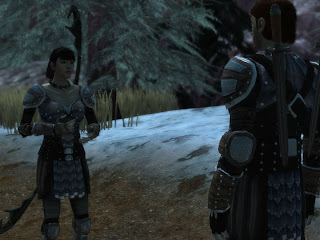
Even this process of voice integration adds significant time to the production of a mod in order to make everything look right. The choice of camera shot, when to cut from one camera to another, what gestures the character should use, how they should stand and their facial expression all must be reviewed before a conversation can be considered "complete".
Neutral facial expressions or gestures that don't match with the line result in a disconnect with the dialogue, because it no longer looks "real". Players can and will pick up on abnormal movements, which will distract them from the true purpose of the cinematic dialogue in modern games: developing a believable scene in which the character can become emotionally invested. Characters whose facial expressions, gestures and tone of voice match to deliver an emphatic line help to give the player a reason to care about the adventure they are experiencing. It is up to the designer to make sure all those elements combine to give the most engaging scene to a player - and that is a responsibility that I take very seriously.
Dialogue has been the primary focus of my modding efforts in recent times, writing conversations involving the major characters in the mod. Now, while this may seem a little strange, given how long I've been working on the mod, and how much of the mod is done, but I find this approach works better for me. While in many cases I've already outlined the content of what will be included in these conversations, the actual spoken lines are usually not written until I'm happy that the overall content provides sufficient character depth and development.
However, in addition to writing dialogue, I've also received recordings for a number of characters from several of my voice actors. These wonderful people are offering their time for free, and helping to bring the people within the mod to life.

Part of a finished dialogue
Even this process of voice integration adds significant time to the production of a mod in order to make everything look right. The choice of camera shot, when to cut from one camera to another, what gestures the character should use, how they should stand and their facial expression all must be reviewed before a conversation can be considered "complete".
Neutral facial expressions or gestures that don't match with the line result in a disconnect with the dialogue, because it no longer looks "real". Players can and will pick up on abnormal movements, which will distract them from the true purpose of the cinematic dialogue in modern games: developing a believable scene in which the character can become emotionally invested. Characters whose facial expressions, gestures and tone of voice match to deliver an emphatic line help to give the player a reason to care about the adventure they are experiencing. It is up to the designer to make sure all those elements combine to give the most engaging scene to a player - and that is a responsibility that I take very seriously.
Sunday, August 14, 2011
Developing a protagonist (Part 2)
In my last post I discussed the tendency of games to provide players with choices that were either good or evil or fell into "categorised" choices of personality. One potential issue with such "choices" is that the player is not ever having to think about their protagonist's true character or how they would react in particular circumstances. These people are effectively metagaming, with only one option that they can pick during dialogue when making a decision, and that is based on a choice about the mechanics presenting the available personas to them. Such characters don't have the depth of a protagonist in film (or even in some games where the player gets no choice in terms of dialogue) because they operate on a predefined set of rules that can be very cleared outlined from very early on in the game. If we're taking a good/evil dichotomy (as is common in many games), the delineation is simple:
Good: Selfless, will give up rewards, protects innocent people, hunts bad guys, etc, etc.
Evil: Selfish, will threaten/bully/kill to gain rewards, doesn't care about innocent deaths, kills anyone who gets in their way, etc, etc.
These two opposite ends of the spectrum don't offer a whole lot of depth in terms of personality. One's a rampant goody-two-shoes, the other an egotistical psychopath, and never shall the two meet. Of course, this isn't to say that players can't decide to create a character with more depth that might provide a mixture of both personalities, but they need to be provided with reasonable choices in which to do so. Blanket black and white choices don't and can't provide this depth of character, even for the player who is trying to create it. We're frequently given choices equivalent to rescuing a stranded cat in a tree (and potentially breaking a limb in the process), or setting the tree on fire to incinerate both it and the cat. These aren't challenging choices that make for interesting or complex protagonists.
Why should writers care about this? After all, flat characters can be a part of entertaining movies, and some of the best selling video games have featured some fairly uninspired and one-dimensional characters. However, this comes down to whether the writer wants to convince the player to take on a predefined stereotype persona, or help them create a complex and meaningful character as they go through the game. If players are presented with choices that don't neatly fit into Good/Evil or Paragon/Renegade (and don't have gameplay mechanic implications associated with them) then they are more likely to analyse the choice they are about to make and try and develop a rationale behind their decision. The aim is to stop players from going "I'm being good" or "I'm being evil" but actually have them engage with the game to the extent that they are creating a multi-dimensional protagonist of their own imagining.
If we're dealing with a roleplaying game, should the writers not attempt to get the player to create a character equally as complex as a protagonist from other storytelling mediums? Should the designers not only facilitate but actively encourage players to create a fully fleshed out and realistic protagonist with a believable personality? The player may start the game with a shell of a protagonist, maybe even one of the three basic stereotypes listed above. But by the end of a story with well-crafted decisions, they will have developed a character with a set of morals and values every bit as complex as the most fully realised characters within the game.
It should also be considered that some people play their protagonist as a virtual avatar - they "are" the protagonist within the game world, and make all decisions as though they are the main player in the story. Arguably, these players offer potentially the greatest reward for a writer: the ability to teach the player something about themselves.
If a player is forced into a true dilemma where they are forced to pick between two very hard choices, then they will potentially learn something about themselves. Would they risk lives by letting a criminal go free and tracking him to potentially catch a bigger fish in the pond, or would they bring them in straight away? Would they allow a mother to sacrifice her life to save her son's, or would they risk both of their lives in an attempt to save them both?
The protagonist should be the most important and complex character within the story. This axiom is commonly used when determining the overall worth or emotion or long-lasting impact of a film. Given this is such an important aspect of storytelling in film, theatre and prose, why is it such a frequently neglected aspect of storytelling within computer games? Gordon Freeman is a blank, emotionless, silent slate: it is up to the player to "be" Gordon and provide him with their thoughts. War from Darksiders has little personality, and along with Marcus Fenix from Gears of War, is practically a static character despite the events within their respective games. Even Alan Wake, a story about a writer, has a personality that's almost as flat and lifeless as they come.
In part, this flat nature may be because these characters never really progress beyond the basic traits that are shown to the player in the earliest stages of the game. They're never forced to develop or show what they are made of besides the straightforward collection of stereotype traits because they're never placed in a situation where they have to make a tough choice. If the protagonist can be placed into a true dilemma, where there is no clear "right" or "wrong", then just as with other story telling mediums, they must display their true character and their values through this choice. These choices are where protagonists from other mediums really shine and mature as characters in front of the audience's eyes.
Games that feature defined characters where the player does not make key game decisions can and should evolve through the story. The protagonist is a willful character that the player is taking through the events of the game, so they should be placed into situations that will demonstrate their true personality and values to the player. This will let the player see more than just surface characterisation, and show a deep and complex protagonist. In Assassin's Creed, Altair goes from being self-centred and arrogant to a more humble and understanding hero. In Thief 2, Garrett leans to trust a former adversary and even laments her death. These characters retain the core personality introduced very early on in the game, but grow and mature throughout their storytelling.
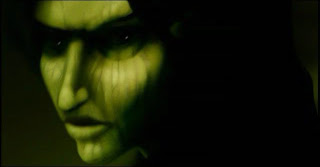
If the player is defining the personality of the game's protagonist, force them to make situations that are truly dilemmas. Force them to pick between the lesser of two evils, or alternatively the greater of two goods. They might moan afterwards that they "had to play through the game twice" or "it didn't make that much difference" or "why couldn't I do both??!?", but ultimately this kind of choice makes the protagonist of the game more complex. This forces the player to examine what their character (or they themselves, if they are playing a "virtual protagonist") would do when placed into this situation.
This is practically the ideal situation for a roleplaying game, as the player is truly forced to adopt a role.
However, there are two very important caveats when dealing with these types of choices. Make sure that these "true dilemmas" are not hamstrung by heavy-handed "alignment" systems that assign a "value" to each decision. If you have a good/evil scale (regardless of what your chosen axis/axes might be) do not modify it because of a player's choice in a "true dilemma". Doing so immediately assigns a value judgement to each option within the dilemma, which means that it is no longer a dilemma and hence the immense value of the choice is lost.
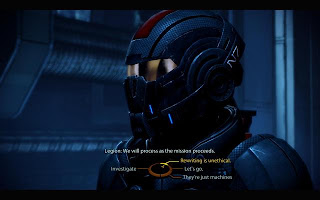
The second caveat applies to all video game choices, but it is even more important when it comes to dilemmas: Don't have a protagonist say "why" they acting the way they are. For one, it sounds unnatural. Only the most poorly written characters verbosely explain the rationale for their actions, because people don't act that way in real life. Secondly, the player is the one making the decision, complete with their own rationale. There is no possible means for the designers to think of every possible rationale that players might have for making a decision, and attempting to do so will only annoy the players that have come up with something you haven't thought of. And that will probably happen in more cases than you would care to imagine.
Designer should be able to get players emotionally and mentally involved with protagonists by giving them true dilemmas to deal with. Let them evolve, grow and show real character and personality throughout the game, and you'll have a more interesting hero for your players to empathise with as they take that journey.
Good: Selfless, will give up rewards, protects innocent people, hunts bad guys, etc, etc.
Evil: Selfish, will threaten/bully/kill to gain rewards, doesn't care about innocent deaths, kills anyone who gets in their way, etc, etc.
These two opposite ends of the spectrum don't offer a whole lot of depth in terms of personality. One's a rampant goody-two-shoes, the other an egotistical psychopath, and never shall the two meet. Of course, this isn't to say that players can't decide to create a character with more depth that might provide a mixture of both personalities, but they need to be provided with reasonable choices in which to do so. Blanket black and white choices don't and can't provide this depth of character, even for the player who is trying to create it. We're frequently given choices equivalent to rescuing a stranded cat in a tree (and potentially breaking a limb in the process), or setting the tree on fire to incinerate both it and the cat. These aren't challenging choices that make for interesting or complex protagonists.

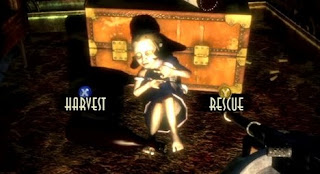
Rescue the innocent girl or "harvest her for power" isn't exactly a complex choice
Why should writers care about this? After all, flat characters can be a part of entertaining movies, and some of the best selling video games have featured some fairly uninspired and one-dimensional characters. However, this comes down to whether the writer wants to convince the player to take on a predefined stereotype persona, or help them create a complex and meaningful character as they go through the game. If players are presented with choices that don't neatly fit into Good/Evil or Paragon/Renegade (and don't have gameplay mechanic implications associated with them) then they are more likely to analyse the choice they are about to make and try and develop a rationale behind their decision. The aim is to stop players from going "I'm being good" or "I'm being evil" but actually have them engage with the game to the extent that they are creating a multi-dimensional protagonist of their own imagining.
If we're dealing with a roleplaying game, should the writers not attempt to get the player to create a character equally as complex as a protagonist from other storytelling mediums? Should the designers not only facilitate but actively encourage players to create a fully fleshed out and realistic protagonist with a believable personality? The player may start the game with a shell of a protagonist, maybe even one of the three basic stereotypes listed above. But by the end of a story with well-crafted decisions, they will have developed a character with a set of morals and values every bit as complex as the most fully realised characters within the game.

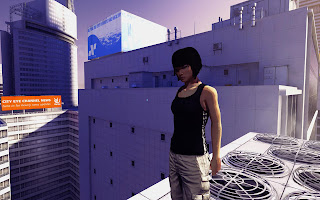
Faith really didn't gain any personality in Mirror's Edge
It should also be considered that some people play their protagonist as a virtual avatar - they "are" the protagonist within the game world, and make all decisions as though they are the main player in the story. Arguably, these players offer potentially the greatest reward for a writer: the ability to teach the player something about themselves.
If a player is forced into a true dilemma where they are forced to pick between two very hard choices, then they will potentially learn something about themselves. Would they risk lives by letting a criminal go free and tracking him to potentially catch a bigger fish in the pond, or would they bring them in straight away? Would they allow a mother to sacrifice her life to save her son's, or would they risk both of their lives in an attempt to save them both?

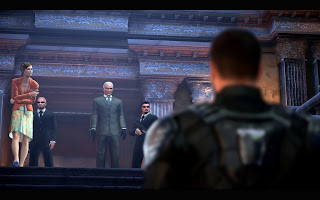
Save a friend/ally/lover or the lives of strangers... now we're getting warmer.
The protagonist should be the most important and complex character within the story. This axiom is commonly used when determining the overall worth or emotion or long-lasting impact of a film. Given this is such an important aspect of storytelling in film, theatre and prose, why is it such a frequently neglected aspect of storytelling within computer games? Gordon Freeman is a blank, emotionless, silent slate: it is up to the player to "be" Gordon and provide him with their thoughts. War from Darksiders has little personality, and along with Marcus Fenix from Gears of War, is practically a static character despite the events within their respective games. Even Alan Wake, a story about a writer, has a personality that's almost as flat and lifeless as they come.
In part, this flat nature may be because these characters never really progress beyond the basic traits that are shown to the player in the earliest stages of the game. They're never forced to develop or show what they are made of besides the straightforward collection of stereotype traits because they're never placed in a situation where they have to make a tough choice. If the protagonist can be placed into a true dilemma, where there is no clear "right" or "wrong", then just as with other story telling mediums, they must display their true character and their values through this choice. These choices are where protagonists from other mediums really shine and mature as characters in front of the audience's eyes.
Games that feature defined characters where the player does not make key game decisions can and should evolve through the story. The protagonist is a willful character that the player is taking through the events of the game, so they should be placed into situations that will demonstrate their true personality and values to the player. This will let the player see more than just surface characterisation, and show a deep and complex protagonist. In Assassin's Creed, Altair goes from being self-centred and arrogant to a more humble and understanding hero. In Thief 2, Garrett leans to trust a former adversary and even laments her death. These characters retain the core personality introduced very early on in the game, but grow and mature throughout their storytelling.

Garrett didn't let Viktoria die for nothing
If the player is defining the personality of the game's protagonist, force them to make situations that are truly dilemmas. Force them to pick between the lesser of two evils, or alternatively the greater of two goods. They might moan afterwards that they "had to play through the game twice" or "it didn't make that much difference" or "why couldn't I do both??!?", but ultimately this kind of choice makes the protagonist of the game more complex. This forces the player to examine what their character (or they themselves, if they are playing a "virtual protagonist") would do when placed into this situation.
This is practically the ideal situation for a roleplaying game, as the player is truly forced to adopt a role.
However, there are two very important caveats when dealing with these types of choices. Make sure that these "true dilemmas" are not hamstrung by heavy-handed "alignment" systems that assign a "value" to each decision. If you have a good/evil scale (regardless of what your chosen axis/axes might be) do not modify it because of a player's choice in a "true dilemma". Doing so immediately assigns a value judgement to each option within the dilemma, which means that it is no longer a dilemma and hence the immense value of the choice is lost.

Why did Mass Effect 2 have to dish out paragon/renegade points?
The second caveat applies to all video game choices, but it is even more important when it comes to dilemmas: Don't have a protagonist say "why" they acting the way they are. For one, it sounds unnatural. Only the most poorly written characters verbosely explain the rationale for their actions, because people don't act that way in real life. Secondly, the player is the one making the decision, complete with their own rationale. There is no possible means for the designers to think of every possible rationale that players might have for making a decision, and attempting to do so will only annoy the players that have come up with something you haven't thought of. And that will probably happen in more cases than you would care to imagine.
Designer should be able to get players emotionally and mentally involved with protagonists by giving them true dilemmas to deal with. Let them evolve, grow and show real character and personality throughout the game, and you'll have a more interesting hero for your players to empathise with as they take that journey.
Subscribe to:
Posts (Atom)

 Posts
Posts

